

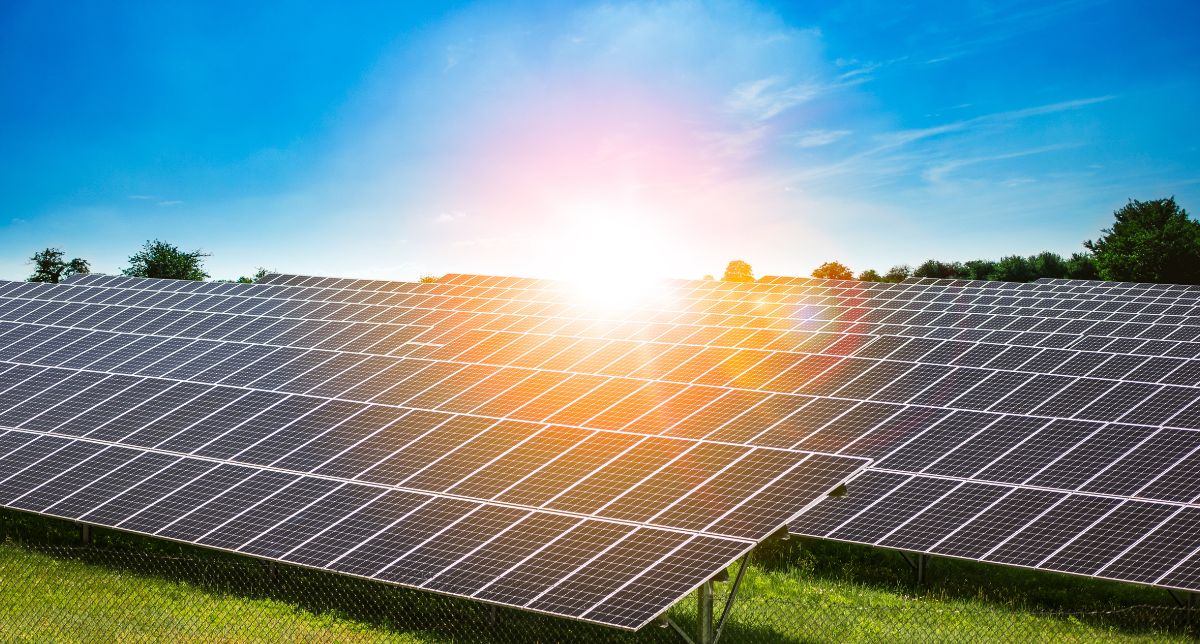
The beginning: when light became electric current
It was 1839. French physicist Alexandre-Edmond Becquerel was only 19 years old when, during electrochemical experiments in his laboratory in Paris, he observed something previously unexplained: when sunlight illuminated a platinum electrode immersed in a conductive solution, an electric current was spontaneously generated. He had discovered the photovoltaic effect, the principle that, nearly two centuries later, would power entire economies.
Becquerel’s discovery, however, remained for decades a scientific curiosity without practical application. The phenomenon was real, but no one yet understood exactly why it happened or how to harness it at scale.
From discovery to silicon: the road to 1954
The next advances came in stages. In 1873, English engineer Willoughby Smith identified photoconductive properties in selenium. Three years later, in 1876, William Grylls Adams and Richard Evans Day demonstrated that this element generated electricity when exposed to light. In 1883, inventor Charles Fritts succeeded in producing the first functional photovoltaic cell, made of selenium, with an efficiency of only 1% to 2%.
The definitive theoretical breakthrough came with Albert Einstein. In 1905, he published the paper explaining the photoelectric effect, describing how light photons release electrons from semiconductor materials when they strike them. The work earned him the 1921 Nobel Prize in Physics and provided the theoretical foundation that would make solar technology viable decades later.
But it was on April 25, 1954, that the story took its most important leap. At Bell Labs, the American research and development company, three scientists, Daryl Chapin, Calvin Fuller, and Gerald Pearson, introduced to the world the first silicon solar cell with an efficiency of approximately 6%. That efficiency may seem low today, but at the time it represented a radical breakthrough: it was comparable to the typical gasoline engine. And silicon, unlike selenium, was abundant, processable, and suitable for doping, the controlled introduction of impurities to alter its electrical properties.
From the space race to rooftops: how solar left the laboratories
The technology found its first market in an unlikely place: space. In 1958, NASA incorporated a small 1 watt photovoltaic panel into the Vanguard I satellite as a backup system. The conventional battery failed. The solar panel kept the satellite operational for eight years. The result was undeniable: every spacecraft developed afterward adopted the technology.
The space race created a virtuous cycle of research and cost reduction. In the 1970s, the oil crisis pushed governments and industries to seek alternative energy sources. In 1973, the University of Delaware built one of the first grid-connected photovoltaic homes in the United States.
In the following decades, solar cell prices declined steadily, driven by advances in manufacturing, conversion efficiency, and production scale, especially after China entered the global market in the 2000s as the world’s largest manufacturer of solar panels. Between 2013 and 2023, photovoltaic module prices fell by more than 80%.
How a photovoltaic system works: simplified physics
Understanding the basic principle is essential for evaluating projects and risks. The photovoltaic effect occurs when photons from sunlight strike the surface of a semiconductor cell, usually made of silicon, and release electrons, creating an electric potential difference. This movement of electrons generates direct current (DC).
Since the electrical grid and most equipment operate on alternating current (AC), a device called an inverter converts DC into AC. In grid-connected systems, excess energy produced can be injected into the utility network and credited on the electricity bill, a model known as net metering or energy compensation.
A typical residential or commercial photovoltaic system consists of:
- Photovoltaic modules: sets of solar cells that capture radiation
- Inverter: responsible for converting DC into AC
- Mounting structure: support installed on rooftops, ground areas, or façades
- Monitoring system: real-time generation monitoring
- Bidirectional meter: installed by the utility company to measure both consumption and energy injected into the grid
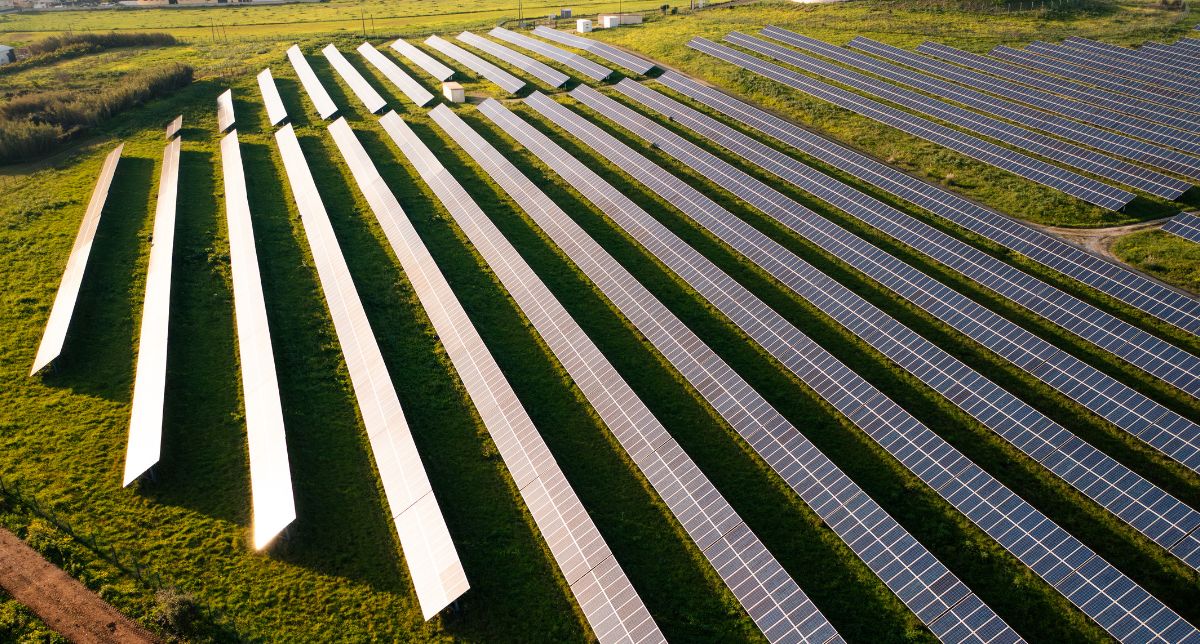
Systems of larger scale, especially utility-scale solar plants (above 5 MW), also include transformers, electrical protection systems, and connection to Brazil’s National Interconnected System (SIN) through substations.
The arrival in Brazil and the first regulatory steps
Brazil entered the solar market later than countries such as Germany, Japan, and the United States. Before 2012, the use of photovoltaic energy in the country was sporadic, limited to rural electrification projects in remote regions, isolated systems, and some academic initiatives. The lack of clear rules for grid connection was the main obstacle.
Two external factors accelerated the transition: the global decline in equipment costs and the continuous increase in electricity tariffs in Brazil, driven by water crises and the cross-subsidy structure of the power sector. It became clear that the exclusively centralized generation model was no longer sufficient, nor financially sustainable for consumers.
RN 482/2012: the turning point
In April 2012, the Brazilian Electricity Regulatory Agency (ANEEL) published Normative Resolution No. 482, establishing the first rules for distributed microgeneration and minigeneration in Brazil. Under the resolution, consumers who installed renewable generation systems, including photovoltaic solar systems, could connect them to the utility grid and offset the generated energy on their electricity bills.
It marked the beginning of a silent revolution. Until then, there had been no legal basis allowing consumers to inject energy into the grid without risking penalties. RN 482 created that possibility and opened the residential, commercial, and industrial markets to photovoltaic solar energy.
In 2015, ANEEL Resolution 687 expanded the scope of the regulation, creating new models such as shared generation and remote self-consumption, while also increasing the capacity limits for microgeneration and minigeneration categories. That same year, ICMS Agreement 16/2015 exempted energy injected into the grid by prosumers from ICMS taxation, and Law 13,169/2015 eliminated PIS and Cofins taxes on solar energy systems, reducing installation costs.
The tax incentives that accelerated the market
The combination of clear regulation and tax incentives was decisive in driving the sector’s boom during the second half of the 2010s. Access to dedicated financing lines, particularly through programs from BNDES and regional banks, made it feasible for small and medium-sized businesses, rural producers, and residential consumers to install photovoltaic systems.
The result was exponential growth in installed capacity. In 2018, Brazil reached 1 GW of solar capacity. By 2024, that number had surpassed 50 GW, representing a fiftyfold increase in six years.
This growth was not only technological, but also financial. According to ABSOLAR data, cumulative investments generated by the solar sector exceeded R$ 232.6 billion by 2024, covering both utility-scale solar plants and distributed generation systems.
The Legal Framework for Distributed Generation — Law 14,300/2022
With the sector’s rapid expansion, the framework established by RN 482/2012 became insufficient to regulate a market already moving billions of reais. On January 7, 2022, Law 14,300/2022, known as the Legal Framework for Distributed Generation, came into force as the sector’s most important regulation to date.
The law consolidated the rules, defined distributed generation categories (DG I, DG II, and DG III), and established a phased tariff transition: systems connected from January 7, 2023 onward would gradually contribute to the costs of using the distribution grid, specifically the TUSD Wire B component. The transition was divided into annual stages:
- 2023: full exemption for DG II systems
- 2024: 15% contribution on Wire B charges
- 2025: 45% contribution on Wire B charges (for systems approved from Jan/2023 onward)
- The progression continues until 2029, when all new systems will pay the full cost of grid usage
The rationale behind the change was to reduce what specialists called a “cross-subsidy”: consumers without solar panels were bearing network maintenance costs that also benefited prosumers. ANEEL regulated the law in February 2023, and Resolution 1,059 of the same year updated technical aspects, requiring utilities to separately display grid consumption and compensated credits on electricity bills.
One important point for investors: systems with a Connection Budget issued before January 6, 2023 were classified as DG I and retain full exemption from the Wire B component for 25 years from the connection date. This differential treatment created a window of opportunity that the market fully exploited, partially explaining the installation record reached in 2022 and 2023.
The biggest reform of Brazil’s power sector in 20 years: Law 15,269/2025
In November 2025, the federal government enacted Law 15,269/2025, resulting from the conversion of Provisional Measure 1,304/2025. The regulation is considered the broadest reform of Brazil’s electricity sector since Laws 10,847 and 10,848 of 2004.
The main impacts on the solar sector are:
1. Gradual opening of the Free Energy Market: The law establishes that, between 2026 and 2028, the Free Contracting Environment (ACL) will open to consumers with demand starting at 100 kW, including thousands of small and medium-sized companies previously tied to the regulated market. For the solar sector, the opening represents both opportunity (more customers for long-term distributed generation contracts) and the risk of utility disintermediation.
2. Regulation of energy storage: The law created the legal basis for regulating battery energy storage systems (BESS — Battery Energy Storage Systems), paving the way for the integration of solar generation and storage in the regulated market. This point is strategic: storage is the primary mechanism for addressing solar intermittency.
3. Curtailment and the controversial veto: Curtailment, the mandatory reduction of generation during periods of oversupply, had become a severe financial problem for utility-scale solar plants. A provision approved by Congress established retroactive compensation for curtailment since September 2023, with estimated impacts of up to R$ 6 billion for the sector. The government vetoed this section, arguing that passing the cost on to consumer tariffs would be inappropriate and that oversupply should not be encouraged. Only curtailments caused by external unavailability and grid reliability requirements became eligible for compensation under the law. The legal debate surrounding the issue is expected to continue through ANEEL and the courts throughout 2026.
It is worth noting that Law 14,300/2022 was not amended by Law 15,269/2025, meaning distributed generation rules remain unchanged.
Solar Brazil in numbers: 63 GW and the challenge of maturity
Brazil ended 2025 with approximately 63.7 GW of operational solar capacity, consolidating solar as the country’s second-largest electricity source, with a 24.5% share of the national power matrix, behind only hydropower. Of this total, 43.7 GW comes from distributed generation (rooftops, façades, and small plots of land), while 20 GW comes from utility-scale solar plants.
According to ABSOLAR, the sector generated more than 1.5 million direct and indirect jobs in 2024 and accumulated more than R$ 250 billion in total investments since 2012.
But 2025 brought signs of slowdown. The country added 10.6 GW, compared to 15 GW in 2024, a decline of 29%. Investments fell from R$ 54.9 billion in 2024 to R$ 32.9 billion, a 40% reduction. ABSOLAR also projects another 7% decline in additions in 2026, which would mark the second consecutive year of slowdown following the historic record set in 2024.
Minas Gerais, São Paulo, Rio Grande do Sul, and Bahia lead in installed capacity. The Northeast region, with some of the world’s highest solar irradiation levels, continues to be the preferred destination for large-scale projects.
Bottlenecks and risks for investors
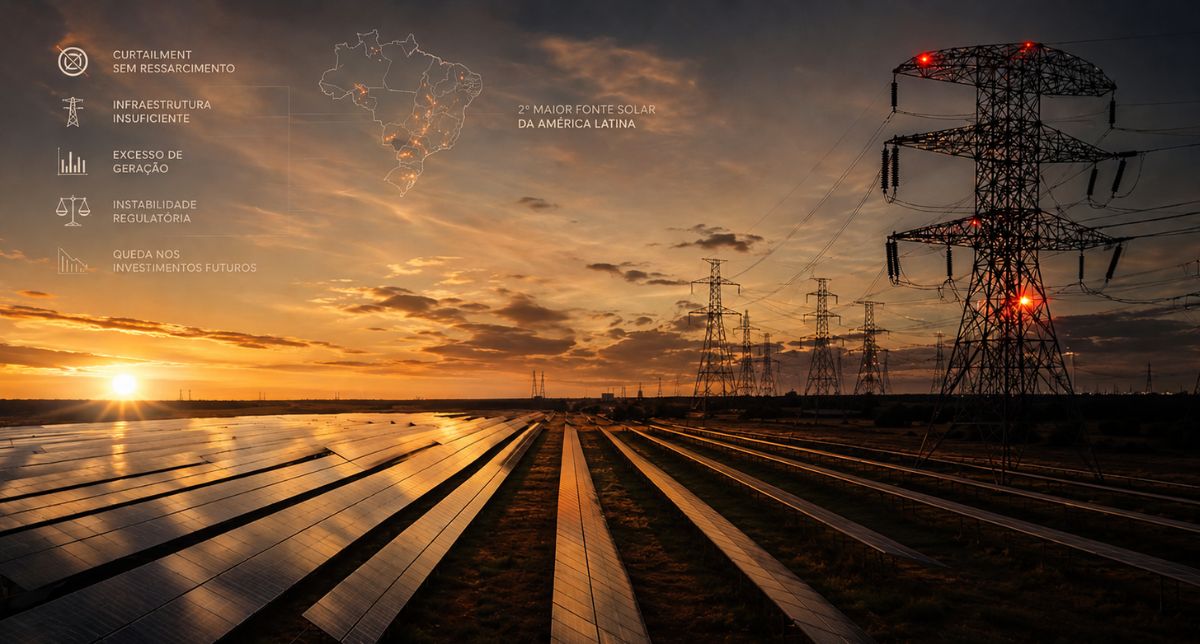
Brazilian solar energy has reached adolescence. There is no shortage of potential demand, natural resources, or a basic legal framework. What remains unresolved are structural bottlenecks already discouraging investors and reducing project profitability:
Curtailment in utility-scale plants
With renewable energy oversupply during certain hours of the day, especially between 10 a.m. and 3 p.m., Brazil’s National System Operator (ONS) has been curtailing solar and wind generation. Investors in utility-scale solar lost approximately R$ 2 billion in revenue due to uncompensated curtailment in 2025. The veto on retroactive compensation under Law 15,269/2025 left this liability unresolved and created uncertainty for future projects.
Grid connection difficulties in distributed generation
Utilities in several regions have denied or delayed the connection of new distributed generation systems, citing saturation of low and medium voltage networks. For integrators and financiers, this represents contractual default risk and uncertainty regarding returns on already contracted projects.
Regulatory uncertainty
The tariff transition established by Law 14,300/2022 has not yet been fully incorporated into long-term investment decisions. Each tariff adjustment, such as the increase from 30% to 45% of the Wire B component in 2025 for DG II systems, directly impacts project payback periods.
High cost of capital
With Brazil’s Selic interest rate remaining at elevated levels, financing costs for solar projects, especially medium and large-scale developments, compress margins and extend return periods. Average payback for residential and commercial systems ranges from three to five years, but may increase depending on financing conditions.
Litigation risk
Law 15,269/2025 opened multiple fronts for legal interpretation regarding curtailment, self-generation, and access to tariff discounts. Specialists warn that the sector may face a new wave of litigation throughout 2026.
Conclusion
Photovoltaic solar energy took nearly two centuries to travel the distance between Becquerel’s laboratory and the rooftops of more than 3 million Brazilians. That journey was not linear. It was shaped by scientific milestones, economic shocks such as the 1973 oil crisis, technological advances, unprecedented cost reductions, and, in Brazil, a regulatory framework that began in 2012 and continues to evolve.
With 63.7 GW installed and a 24.5% share of the electricity matrix, Brazil has secured a prominent position on the global stage. But the sector’s maturity brings challenges that did not exist during the market’s early years: curtailment, distribution grid saturation, tariff transition, and legal uncertainty will define the pace of growth in the coming years.
For investors, the environment now requires more sophisticated analysis. The era of guaranteed margins supported by full incentives and zero grid costs ended with Laws 14,300/2022 and 15,269/2025. What remains is one of the best solar resources on the planet, growing electricity demand, and a regulatory framework that, despite turbulence, continues to move in the right direction.
The sun still rises. The question is: who will be best positioned to capture it.

Comment