

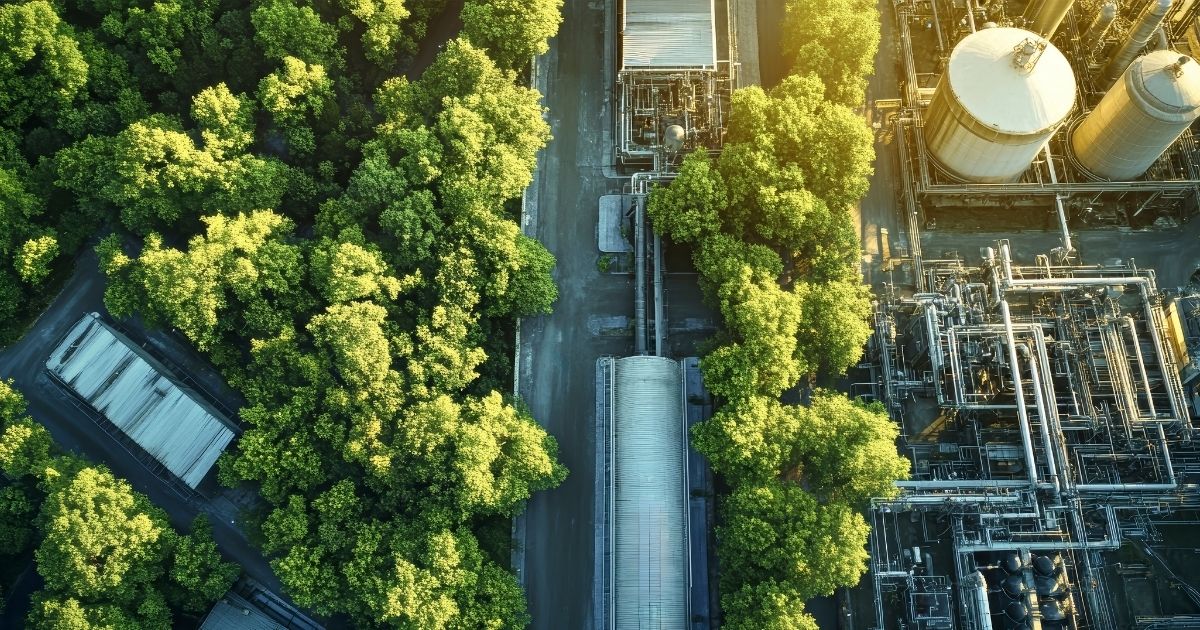
Brazilian landfills are the main source of methane in the waste sector, and the country still wastes most of this gas. With the Fuel of the Future Law in force, ANP regulation published in 2026 and an estimated pipeline of R$ 8.5 billion in investments, landfill biogas has moved beyond the realm of promise to become a concrete energy asset. This article analyzes the current landscape, structural bottlenecks and what is at stake for investors in this market.
The gas rising from landfills
Beneath every tonne of organic waste deposited in a landfill, an invisible power plant is already at work. Anaerobic bacteria break down organic matter and release methane, a colorless, highly flammable gas with a global warming potential estimated to be 80 times greater than CO₂ over a 20-year horizon. For decades, this gas simply escaped into the atmosphere or was burned in flares, without any energy use.
That scenario is changing. Not because of environmental altruism, but because of the combination of three factors that rarely appear together in the energy sector: regulation that creates mandatory demand, existing distribution infrastructure and an abundant resource that, until recently, was treated as a liability. Landfill biogas has finally become an asset.
For those following Brazil’s energy and sanitation sectors, 2026 marks the beginning of a concrete phase: the rules have been published, the captive market has been created and capital is starting to move. The relevant question is no longer whether this market will happen, but who will position themselves first.
What landfill biogas is and how it becomes energy
The biogas generated in landfills is the result of the anaerobic decomposition of organic waste, including food scraps, paper and wood, which make up around half of all urban waste produced in Brazil. This process, which occurs naturally over decades in an operating landfill, produces a gas composed mainly of methane, between 50% and 60%, and carbon dioxide.
This biogas can follow three paths: it can be burned in flares, used directly to generate electricity or purified to remove CO₂ and impurities, becoming biomethane, a molecule that is practically identical to fossil natural gas. Biomethane can deliver up to 99% decarbonization and emits 2.5 times less CO₂ than conventional natural gas. Because its molecules are similar to those of natural gas, it does not require adaptations to existing storage and distribution infrastructure.
This molecular compatibility is what makes landfill biomethane particularly attractive from an economic standpoint: it can be injected into existing gas pipelines, supplying homes, industries and vehicles without any changes to end-user equipment. There is no need for a new end-to-end infrastructure system, only a connection to the network already in place. In Fortaleza, this is already a reality: 25% of the gas consumed in the city already comes from landfills.
The scale of the waste: lost methane, damaged climate
The contrast between potential and reality is where the market reveals its largest latent asset. Brazil has an estimated biogas generation potential for energy purposes of around 84.6 billion Nm³ per year, enough to supply 40% of domestic electricity demand and 70% of diesel consumption, according to data from the International Center for Renewable Energy (CIBiogás). This figure makes the current situation even more revealing. Ecogen Brasil
According to the 2024 Solid Waste Overview in Brazil by Abrema, less than 1% of the country’s urban solid waste is used for energy recovery. Currently, less than 0.2% of organic waste deposited in landfills is converted into biomethane, and Brazil has only six biomethane production plants located at landfill sites.
From a climate perspective, the cost of this waste is measurable. The waste sector is Brazil’s second-largest source of methane emissions, with 3.1 million tonnes of CH₄ emitted in 2023. In 2024, the waste sector recorded the highest emissions in Brazil’s historical series, reflecting the increase in the amount of waste collected by Brazilian cities.
The logic is simple: landfills without biogas capture systems emit methane directly into the atmosphere. Landfills with basic capture systems burn the gas in flares, converting methane into CO₂, a less potent gas, but still emitting. Only conversion into energy, whether electricity or biomethane, closes the cycle in an economically productive way. Landfills prepared to produce biomethane can capture up to 90% of the biogas generated, producing carbon credits as a byproduct.
The regulatory turning point: the Fuel of the Future Law and ANP resolutions
For years, landfill biogas operated in a regulatory vacuum that made project financing difficult. Without guaranteed demand and without a clear legal framework for biomethane commercialization, investors faced a market risk that was too high for long-maturity projects.
This scenario changed with the approval of Law 14,993/2024, known as the Fuel of the Future Law. The main measure of the biomethane program is the creation of mandatory biomethane demand from 2026 onward, with the CNPE responsible for defining annual mandatory greenhouse gas emission reduction targets in the natural gas market.
In practice, the law creates an obligation similar to ethanol blending in gasoline: starting in January 2026, the natural gas sector must inject between 1% and 10% biomethane into natural gas. This represents, for the first time, a structured captive market for biomethane produced from landfills, with contractual predictability and a long-term horizon.
Another important advance was the creation of the Biomethane Guarantee of Origin Certificate, known as CGOB, which allows market participants to prove emission reductions both through the purchase and consumption of the molecule and through the acquisition of the certificate. The law provides for the CGOB to function both as a traceability certificate and as a tradable asset in the capital markets.
In February 2026, this framework became operational with ANP Resolutions No. 995 and 996/2026. The rules address the issuance of the CGOB and the individualization of annual targets to be met by natural gas producers and importers, establishing criteria for origin certification, accreditation of certifying agents and traceability rules. With the approval of these resolutions, ANP consolidates a strategic regulatory framework that strengthens predictability, encourages investment and positions renewable gas as a relevant vector of the energy transition.
For investors, this regulatory package means one concrete thing: demand risk has fallen substantially. There is now a legally obligated buyer, a traceable and tradable certificate and a regulatory agency with clear supervision and sanctioning rules.
The market taking shape: investments, plants and opportunities
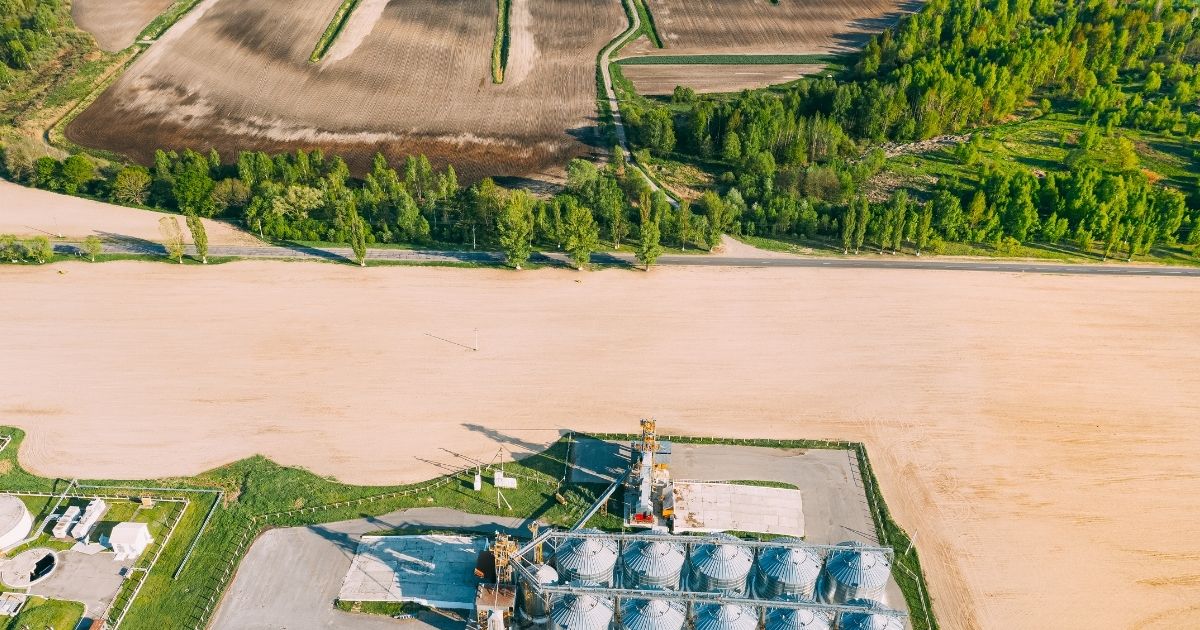
Capital has already begun to move. Abrema estimates that R$ 8 billion in investments in biogas and biomethane will be unlocked by 2029, directed toward the development of technologies for production from waste. A more recent update expands this projection: the sector is expected to receive R$ 8.5 billion in investments in waste-based biomethane plants over the next few years.
Investors from Singapore, Switzerland and Japan have already held meetings with Brazilian sector entities, showing interest both in biomethane production and in the purchase of carbon credits associated with the solid waste sector. This foreign interest is not accidental: Brazil offers waste generation at scale, expanding gas pipeline infrastructure and a newly consolidated legal framework, a rare combination in emerging markets.
In this context, companies such as Eva Energia are closely monitoring opportunities for integration between sanitation, distributed generation and clean energy, observing how landfill biomethane can connect to energy generation and supply for industrial and commercial operations.
Production is already growing: in 2024, Brazil produced 81.5 million cubic meters of biomethane, an increase of 8.9% over the previous year. Current installed capacity, at 600,000 m³ per day, is equivalent to supplying 250,000 vehicles every 15 days or around 1.2 million gas cylinders per month, and is expected to grow significantly with new projects under development.
The real bottlenecks: infrastructure, inadequate disposal and the carbon challenge
It would be naive to treat this market as a race without obstacles. There are structural bottlenecks that investors need to map clearly.
Inadequate disposal: The first and most critical bottleneck lies at the base of the chain. Of the 88.11 million tonnes of waste produced annually in Brazil, only 74% is sent to landfills, and the country has 700 sanitary landfills. Distribution is geographically uneven: the Southeast region has 368 units, while the North has only 22, which helps explain the differences in final disposal practices, with 71.3% adequate disposal in the Southeast versus 38.7% in the North. Without waste being properly sent to sanitary landfills, there is no biogas to capture.
Injection infrastructure: Connecting a biomethane plant to the gas pipeline network requires authorization, investment in branch lines and agreements with distributors, processes that can take years. Regulation has advanced, but the physical connection infrastructure remains a bottleneck in regions where gas distributors have lower network coverage.
Carbon market: There is an ongoing regulatory dispute that deserves attention. The carbon market bill approved by the Chamber of Deputies included an amendment excluding landfills with biogas capture and control systems from the offset system. According to Abren, this measure undermines compliance with the Global Methane Pledge, under which Brazil committed to reducing methane emissions by 30% by 2030. The text is still under review in the Senate and may be changed, but the regulatory risk exists and should be monitored by those structuring projects with dual revenue streams, energy and carbon.
Maturation time: Biomethane takes between three and five years to be generated from deposited organic waste. New projects depend on landfills with an already accumulated waste mass, which favors concessions of existing landfills over pure greenfield projects.
What matters to investors
For those looking at this market through the lens of capital allocation, several points are decisive.
Revenue predictability: The biomethane mandate creates guaranteed demand. Combined with long-term contracts with gas distributors, the revenue of a well-structured project has an infrastructure profile, with low volatility and long duration.
Multiple revenue streams: A sanitary landfill with a complete energy recovery system can simultaneously generate revenue from biomethane, through gas sales; carbon credits, through methane capture; waste disposal, through gate fees; and potentially electricity generation. This diversification reduces concentration risk.
Residual regulatory risk: The carbon market has not yet been fully defined for the sector. The outcome of the Senate review will determine whether landfills with biogas capture systems will be able to participate in the Brazilian Emissions Reduction Market, and how much that will be worth in practice.
Municipal concessions: The most accessible model for private investors is partnership with municipalities, through concessions or public-private partnerships. The closure of all open dumps by 2028 is one of the mitigation policies planned for the waste sector. Combined with better use of landfill biogas, this could reduce the sector’s emissions by almost one third, creating pressure on mayors to structure these contracts.
Scale and location: Economically viable projects generally require landfills receiving more than 1,000 tonnes of waste per day. Metropolitan and regional landfills have this scale; landfills in smaller cities depend on consortium-based solutions.
Conclusion
Landfill biogas is no longer a promising technology waiting for regulation. It is a market under construction, with regulated demand, capital in motion and an underestimated asset that Brazil has accumulated for decades without fully using. The combination of the Fuel of the Future Law, ANP resolutions published in 2026 and an investment pipeline close to R$ 8.5 billion signals that the positioning window is open, but it will not remain open indefinitely.
The bottlenecks are real: inadequate waste disposal, insufficient injection infrastructure in some regions and uncertainty around the regulated carbon market. But those able to navigate these risks will find a market with rare characteristics: reusable infrastructure, mandatory demand, multiple revenue streams and a long-term horizon. The waste Brazil still does not know how to use is, from the right perspective, one of the most underestimated assets of the energy transition.

Comment