

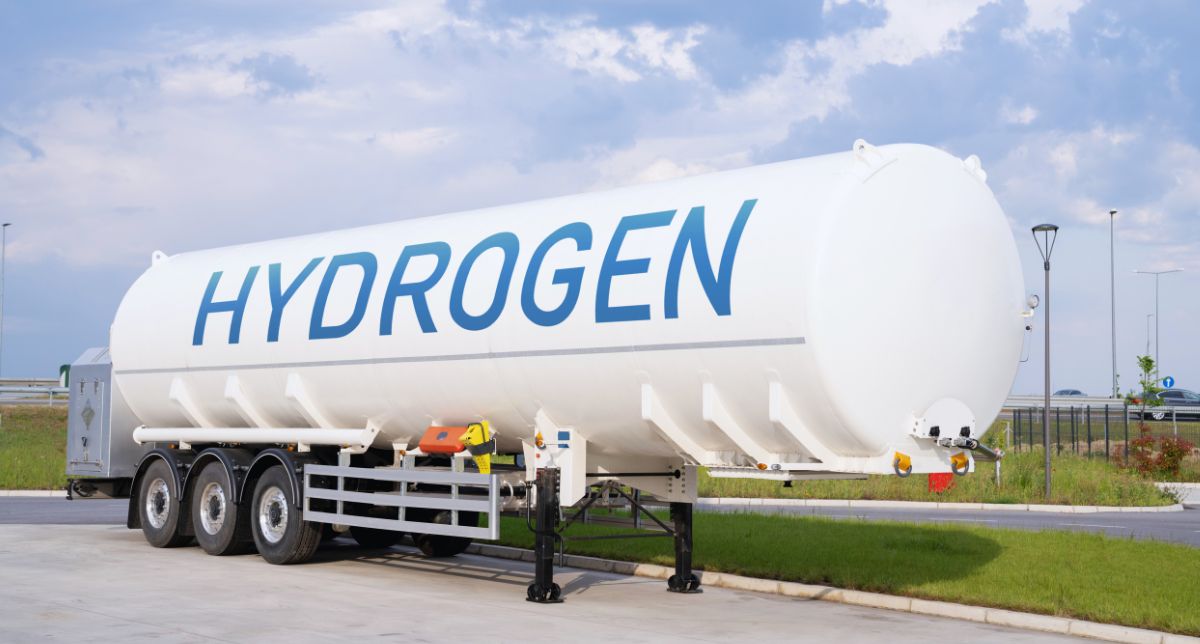
A decree promised a year and a half ago is holding back R$25 billion in tax incentives while the world does not wait. The window of history for green hydrogen is open, but for how long?
There comes a moment in a country’s life when destiny knocks with a rare opportunity. Brazil experienced this with pre-salt oil. It experienced it with soy. It experienced it, in a way, with ethanol. Now a new window opens, this time with green hydrogen, and what we see in Brasília is a disturbingly familiar scene: stalled bureaucracy, a promised decree that never arrives, and the productive sector watching the clock with the anxiety of those who know the train passes only once.
Brazil’s green hydrogen industry has been waiting for a year and a half for the publication of decrees that could unlock R$24.6 billion in tax incentives in the coming years. The government promised the texts would be ready as early as COP30, but procedural issues delayed delivery. What seemed like a matter of weeks has turned into one of the most frustrating examples of regulatory misalignment in Brazil’s recent energy sector.
For those who have followed this market for more than two decades, the feeling is déjà vu. It is not the first time Brazil has taken the lead only to lose pace due to political hesitation. But this time, the circumstances are different, more urgent, and more competitive. The world is racing to build green hydrogen infrastructure, and Brazil has everything this race demands: sun, wind, water, land, and competitive costs. What is missing sits in a drawer in a ministry in Brasília.
What is at stake, exactly
To understand the scale of what is stalled, it is necessary to step back in time. In 2024, after years of debate and negotiation, the Brazilian Congress approved two key legal frameworks for the sector. The decrees will regulate two laws passed in the second half of 2024. The first created Rehidro, a regime that guarantees the suspension of federal taxes for green hydrogen projects in the country. The second provides tax credits for producers and buyers of the fuel who participate in government-organized auctions.
The fiscal impact is significant but measured. Another R$6.3 billion will come from the suspension of federal taxes on the purchase of equipment used by projects and on the purchase of the fuel itself. In the latter case, the beneficiaries will be the clients of green hydrogen companies. The estimate was calculated based on an analysis by the Ministry of Finance, which considered that these suspensions would correspond to 10% of the sector’s investments, currently estimated at R$63 billion by 2030, according to ABIHV.
The tax credits under the Low-Carbon Hydrogen Development Program, PHBC, have a clear timeline. Annual incentive limits will be R$1.7 billion in 2028, R$2.9 billion in 2029, R$4.2 billion in 2030, R$4.5 billion in 2031, and R$5 billion in 2032. In total, R$18.3 billion over five years, primarily directed toward hard-to-decarbonize industrial sectors such as steelmaking, petrochemicals, and heavy transport.
The mechanism is smart. Instead of direct subsidies, the government offers credits that companies can use to offset federal taxes. If there are no taxes to offset, the company can request payment in cash. It is a way to put money into play without directly opening the treasury, steering the market through clear and predictable rules.
The problem is that these rules are still not clear. The decrees that give practical effect to the laws have not yet been published. Without them, no auction can be organized, no project can access the benefits, and no investor can make the so-called Final Investment Decision, FID, the moment when real money begins to flow.
A sector in the waiting room
ABIHV’s main demand is the publication of presidential decrees regulating Laws 14,948 and 14,990, both from 2024. For months, the government has promised publication “in the coming weeks,” and the market has expressed concern over the delay, as access to tax incentives has an expiration date.
“The major challenge of 2026 is to complete the sub-legal regulation of the low-carbon hydrogen framework. This stage is essential to enable final investment decisions and provide security for projects,” says Fernanda Delgado, executive director of ABIHV.
Delgado’s statement is polite but loaded. Behind the technical vocabulary lies a simple message: companies are ready, projects exist, capital is available, but no one will press the button without knowing the rules of the game. And the rules are still being written, rewritten, revised, and promised in a cycle of frustrated expectations that has lasted more than eighteen months.
Seven industrial-scale projects, totaling R$63 billion in investments, plan to reach final investment decisions in Brazil in 2026, effectively placing the country on the green hydrogen map. These will be Brazil’s first FIDs for hydrogen production via electrolysis at industrial scale, marking the transition from planning to implementation.
These projects exist, they have names, locations, and investors. What is missing is the regulatory certainty that turns intention into reality.

Europe wants to buy, Brazil has no contract to sign
European demand for green hydrogen is real, urgent, and growing. The bloc has committed to ambitious decarbonization targets and knows it will not be able to produce all the hydrogen it needs domestically. Production costs in Europe are substantially higher than in Brazil’s Northeast. This calculation is simple, and every energy analyst knows it.
The Green Hydrogen Hub being implemented at the Pecém Industrial and Port Complex aims to export up to one million tons of this fuel to Europe by 2030. The Port of Rotterdam projects producing up to four million tons of green hydrogen by 2030, with 25% to be produced in Ceará.
This data is revealing. Rotterdam, Europe’s largest port and one of the continent’s main energy gateways, is betting on Brazil for a quarter of its green hydrogen needs. This is not a distant hope. It is a concrete strategy, with formal partnerships, signed memoranda, and detailed infrastructure projects underway.
“One of the most important items on my agenda this year is working with Europe so they sign advance contracts here. But for that, things on our side also need to be ready, such as decrees, financing, and infrastructure,” says Fernanda Delgado, CEO of ABIHV.
The statement precisely summarizes Brazil’s dilemma. The buyer is at the table, cash in hand. The seller is at the table, with the product available. And in between, there is a decree that does not come.
The debate no one wants to have in public
Within the government, there is a discussion that rarely appears in official statements but explains much of the delay. The Ministry of Finance has legitimate concerns about the profile of projects that would benefit from tax incentives.
Another concern is ensuring that tax benefits help develop and decarbonize domestic industry rather than simply incentivizing exports of green hydrogen to Europe. “We understand that most of the projects currently pushing for this decree are projects that want to export hydrogen with Brazilian tax incentives to decarbonize foreign industries,” says the Finance Ministry official responsible for the area.
This is a serious objection that deserves open debate. Does it make sense for Brazilian taxpayers to subsidize the decarbonization of German steelmaking or Dutch petrochemicals? The answer depends on how benefits are measured: jobs created, foreign exchange earnings, local technological development, and Brazil’s integration into a high-value global supply chain.
Currently, 90% of green hydrogen projects target the European market. The absence of policies to stimulate domestic demand in steel and fertilizer industries is seen as a missed opportunity. A professor from UFC cited by Diário do Nordeste goes further: “The government says one thing at COP30 and weeks later announces contracts with coal-fired thermoelectric plants. That makes investors rethink their projects.”
The tension between the discourse of energy transition and concrete decisions on the power matrix is real and directly affects Brazil’s credibility with international investors who need consistency to make multibillion-dollar decisions.
What the numbers say about the future
ABIHV estimates that if Brazil reaches around 4% of global green hydrogen production, the impact could reach R$7 trillion in GDP by 2050. For perspective, this is roughly twice Brazil’s current GDP.
Even without such long-term projections, immediate benefits are tangible. Brazil imports about 85% of its fertilizers, spending tens of billions of dollars annually on inputs for agribusiness. Green hydrogen is a key input for producing sustainable fertilizers, essential for green ammonia projects. Brazil imports about 85% of its fertilizers and 90% of the related technologies.
There is also the aviation fuel market. Green hydrogen is an input for sustainable aviation fuels and green diesel, which will become mandatory in Brazil in 2027. The molecule can also be converted into green methanol and ammonia to fuel large ships, complying with future IMO decarbonization schemes. These are real markets with concrete and growing demand. Brazil has the raw materials, emerging infrastructure, international partners, and approved laws. What is missing is the decree.
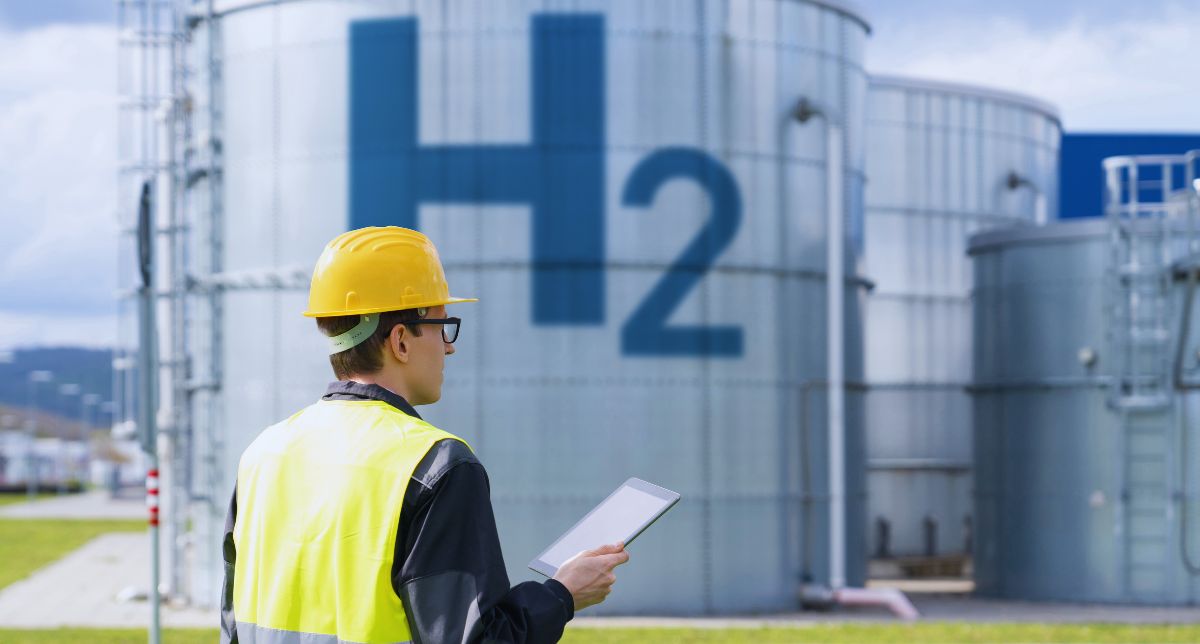
A bottleneck that goes beyond paper
The sector knows that even with the decrees published, challenges will not end. The main physical bottleneck identified by the sector and experts is access to the power grid. The Agenda 2026 timeline indicates that grid reinforcements and the release of a 3-gigawatt margin specific to Ceará and Piauí will only occur in 2029.
This means that even if the decrees are issued tomorrow, some plants will not produce before the end of the decade. This reinforces the urgency: every month of delay in the decree is one less month of useful time to resolve the other bottlenecks in the chain.
Executives across the sector point to the need to expand transmission infrastructure and change grid access rules, as some connection requests are being denied by the system operator. Brazil’s power grid, designed for a different model of production and consumption, needs to be adapted to support the scale of electrolysis that green hydrogen requires.
The window of opportunity
In November 2025, Minister Alexandre Silveira announced that the decree regulating the low-carbon hydrogen legal framework would be signed the following week, in a statement made on the sidelines of COP30 in Belém. Months later, the decree had still not been published.
COP30 was the perfect moment for Brazil to show the world it was serious about its vocation as a clean energy powerhouse. But the symbolic act of signing a decree at a global climate conference was replaced by yet another delay, another promise of “coming weeks” that the market has learned not to take literally.
ABIHV Council president Luis Viga believes Brazil already has structured projects and ready investors. “What we need now is to move forward with regulatory certainty and instruments that reduce the cost of capital, allowing these projects to move off the drawing board.”
The Brazil that could be
At the beginning of 2026, green hydrogen is no longer a promise of the future. It is a reality under construction in dozens of countries. Germany, which for decades burned coal to sustain its industry, is buying clean energy from Morocco and Namibia. South Korea has signed agreements with Australia to secure supply. Japan has projects operating with green ammonia as a marine fuel.
Brazil, meanwhile, has the best natural portfolio on the planet to be a protagonist in this transition. It has steady winds in the Northeast. It has sunshine hundreds of days a year. It has coastline, ports, and know-how in renewable energy built over decades of wind and solar expansion. It even has confirmed buyers across the Atlantic.
The window is open. The decree is on the table. And Brazil, as so many times before, is choosing between the courage to act and the paralyzing comfort of yet another review.

Comment