

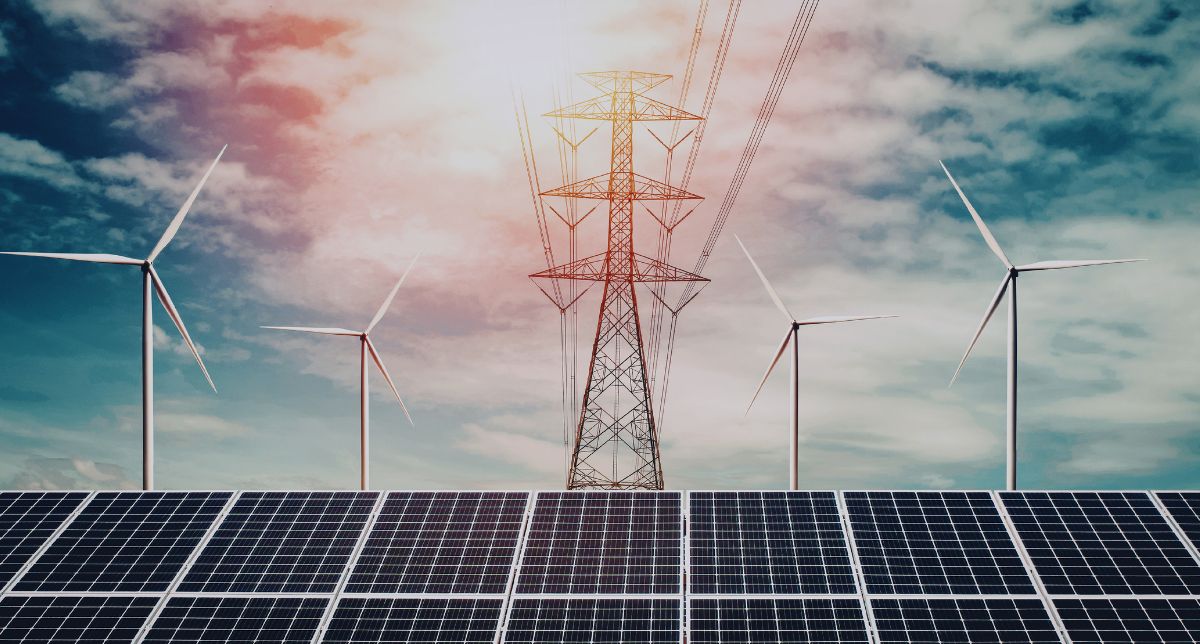
Brazil reached 2026 with 88.2% of its electricity generated from renewable sources, one of the cleanest energy mixes on the planet. Paradoxically, the government has just held the largest thermal power auction in the country’s history, contracting 19 GW of capacity for R$64.5 billion to ensure energy security through the next decade. This article explains why this apparent paradox is, in fact, the most important structural turning point in the national power sector: Brazil has moved away from hydro dependence and is now operating a multi-technology system that is more complex, more expensive, and at the same time more resilient.
The paradox no one expected to explain
Imagine a country that generates nearly 90% of its electricity from clean sources deciding, in March 2026, to hold the largest thermal power plant auction in its history. It sounds contradictory. That is exactly what Brazil did, and there is a very precise reason for it.
The Capacity Reserve Auction (LRCAP), held on March 18 and 20, 2026, and organized by ANEEL, the Ministry of Mines and Energy, and the CCEE, contracted 18.97 GW of capacity, with investments of R$64.5 billion and a guaranteed annual fixed revenue of R$38.9 billion paid to developers for system availability.
This is not a setback. It is a new phase.
To understand what is happening in Brazil’s power sector, it is necessary to abandon the linear narrative that “more renewables means less fossil fuel.” The operational reality of a system with very high solar and wind penetration is far more complex than that.

Renewables have won. Now what?
The numbers are undeniable. According to the 2025 National Energy Balance (BEN 2025), published by the Ministry of Mines and Energy and the Energy Research Company (EPE), Brazil ended 2024 with 88.2% of its electricity mix composed of renewable sources. Solar photovoltaic generation grew 39.6% in a single year, reaching 70.7 TWh, with an installed capacity of 48,468 MW. Wind power reached 107.7 TWh, a 12.4% increase, with 29,550 MW of installed capacity. Together, solar and wind already account for 23.7% of the country’s total electricity generation.
In terms of installed capacity monitored by ANEEL, Brazil surpassed 215,000 MW by the end of 2025, with 84.42% coming from renewable sources. The country plans to add 9,142 MW of new capacity in 2026 alone, representing a 23.4% increase compared to the previous year.
Solar energy has become the second largest source in Brazil’s power mix, accounting for 22% of installed capacity, according to data from Absolar and Agência Brasil. And this growth has been faster than any pessimistic or optimistic projection made five years ago.
The problem is no longer generating clean energy. The problem is operating a power system that generates clean energy intermittently.
The return of thermal plants as state policy
The 2026 LRCAP was not an improvised decision. It is the result of an in-depth technical assessment carried out by EPE and the National System Operator (ONS) regarding the needs of the National Interconnected System (SIN) through 2035.
The auction was structured in seven sequential rounds, with capacity delivery products between 2026 and 2031. Of the 19 GW contracted, approximately 16.7 GW came from natural gas and coal-fired thermal plants, and 2.3 GW from hydroelectric expansions. It was also the first auction to enable hydro expansion after years without major additions in this source.
The new contractual logic introduced by the LRCAP is equally significant: for the first time, Brazil contracted capacity with flexibility requirements, replacing previous models structured solely around energy. This means that the contracted plants will be paid not only for generating electricity, but for being available and capable of dispatching quickly when the system requires it. It is a profound conceptual shift in the contracting model.
The average discount was only 5.52% relative to the price cap set by the Ministry of Mines and Energy, which drew criticism. The National Front of Energy Consumers and Abrace (Brazilian Association of Large Industrial Energy Consumers) warned that the contracted volume was excessive and could increase electricity bills by up to 10%. The annual cost of the contracts is R$38.5 billion, with a direct impact on tariffs and inflationary pressure. The technical staff of the Federal Court of Accounts (TCU) had identified weaknesses in the auction design before it was held, but recommended that it not be postponed.
The government argues that the cost of planned energy security is always lower than the cost of emergency plant dispatch, which has historically proven far more expensive for consumers.
The cost of energy security and who will pay
Brazil’s tariff equation has become more complex. The contracting of R$515.7 billion in total revenue over the life of the contracts, with winners receiving fixed monthly payments for capacity availability regardless of how much they generate, represents a permanent charge on the system.
This model, known as a “capacity market,” is common in countries with mature energy systems such as the United States and the United Kingdom. In Brazil, however, it is relatively new and raises cost allocation questions that have not yet been fully resolved. The debate over who pays, whether free or regulated consumers, and in what proportion, is expected to continue throughout 2026 and will impact the free energy market.
In addition to the main LRCAP, the second stage of the auction, held on March 20, contracted 501 MW of diesel and biodiesel thermal plants, with an additional annual fixed revenue of R$229.8 million. Although the discount was significant (50.14%), these are recognized as more expensive and more polluting sources, which generated further criticism from industry experts.
Former ANEEL and ANA director-general Jerson Kelman stated that contracting coal-fired plants in the auction amounts to a subsidy disguised as energy policy, noting that these plants lack operational flexibility and lead in greenhouse gas emissions.
The dilemma is real and has no simple answer: energy security has a cost, and that cost must be distributed among system stakeholders.
Energy storage: the next frontier
If the thermal auction represents a short- and medium-term solution to renewable intermittency, the long-term horizon points to a radically different technology: batteries.
The federal government has confirmed that the notice for Brazil’s first utility-scale energy storage auction (BESS, Battery Energy Storage Systems) is expected to be published in April 2026, with the auction to be held later that same year. The proposal includes the possibility of requiring minimum storage percentages between 10% and 30% of the capacity associated with new plants connecting to the SIN, as a way to reduce curtailment events and ensure operational stability.
Private sector interest is already significant: more than 126 GW of storage projects have been registered, awaiting contracting conditions. Companies such as Tesla, Sungrow, and Huawei are closely monitoring the structuring of the first auction. The BESS market is projected to reach 7.2 GW of installed capacity by 2040, with direct investments that could exceed R$22 billion by 2030.
The country’s first large-scale battery system began operating in São Paulo in 2024, at the Registro substation operated by ISA CTEEP, serving as a pilot and technical reference for future cycles. In 2026, the model is expected to be replicated at critical nodes of the national grid.
Globally, lithium-ion battery costs have fallen from US$370/MWh in 2024 and are expected to reach US$235 by 2030, according to data from DNV, a company specializing in certification and risk management in the energy sector. This cost reduction is what will make storage economically viable at scale in the coming years.
The regulator (ANEEL) has also launched public consultations to define the rules for connecting storage systems to the grid, consolidating the regulatory framework needed to unlock investments.
The new power system: orchestration, not just generation
Brazil in 2026 operates a power system that is fundamentally different from that of 2015. At that time, the challenge was ensuring sufficient hydroelectric capacity to meet growing demand. Today, the challenge is coordinating in real time a mix of sources with completely different physical characteristics: hydroelectric plants with dispatch flexibility, wind power dependent on wind conditions, solar generation peaking at midday and dropping to zero at night, thermal plants with high variable costs but controllable dispatch, and soon batteries capable of absorbing excess energy and releasing it during peak demand periods.
This operational complexity requires investments that go far beyond generation. Transmission must keep pace with the expansion of renewable sources, especially in the Northeast. The digitalization of distribution networks, outlined in ANEEL Ordinance No. 111/2025, is essential for the system to respond quickly to supply fluctuations. The free energy market will need to incorporate new flexibility products that are still under development.
The combination of all these elements defines a new paradigm: Brazil’s power sector is no longer about generation. It is about orchestration.
Companies operating in the sector that can navigate this complexity, understanding the interaction between intermittent sources, thermal backup, storage, and transmission, will be in a strong position to capture opportunities that less prepared players will miss.
2026 as a true inflection point
The March 2026 LRCAP is not an energy setback. It is a mature recognition that a successful energy transition requires much more than adding renewable capacity. It requires the entire system, generation, transmission, storage, operation, and market, to evolve in a coordinated manner.
Brazil has taken a structural step by abandoning the hydro-dependent model and adopting a multi-technology approach, with different sources playing distinct roles at different times of the day and year. This system is more expensive to operate in the short term. But it is more resilient, more secure, and, with declining storage costs over the next decade, it may also become more competitive.
The turning point of 2026 is not only in the auction numbers. It lies in a shift in mindset: Brazil’s power sector now recognizes itself as a complex system that requires sophisticated planning, adaptive regulation, and continuous strategic intelligence. Companies and investors who understand this shift ahead of their competitors will gain a real competitive advantage in the coming cycles.
The future of energy in Brazil is neither renewable nor thermal. It is the intelligent combination of all sources, operated with precision, flexibility, and long-term vision.

Comment