

For many years, biogas occupied a relatively well-defined place on Brazil’s energy agenda. Its importance was associated primarily with waste recovery, wastewater treatment, energy production in rural areas and, more recently, the expansion of biomethane as a renewable substitute for natural gas and fossil fuels. This trajectory remains relevant, but a new dimension is beginning to emerge as Brazil’s power system undergoes a structural transformation.
The rapid expansion of solar and wind generation is changing not only the composition of the country’s electricity mix, but also the operating dynamics of the National Interconnected System. Brazil continues to expand its renewable capacity, but the discussion is no longer limited to how much clean energy is available. It is becoming increasingly important to assess when that energy is produced, how long it remains available and which resources can be called upon when generation and consumption do not coincide.
It is within this new environment that biogas is beginning to take on an additional role.
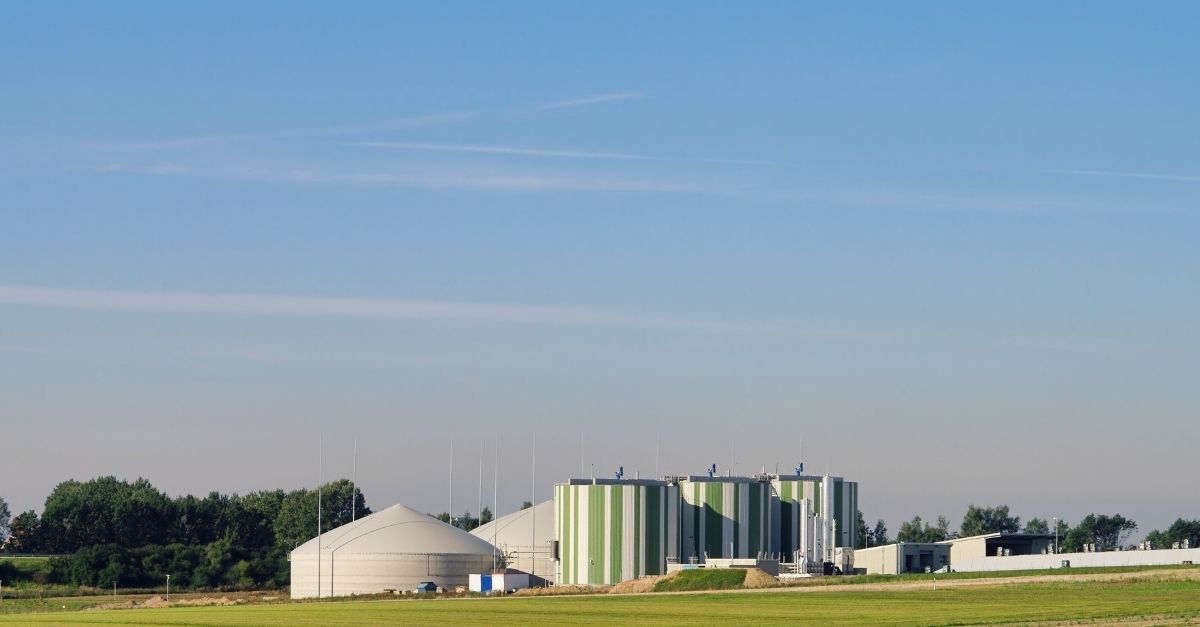
The Brazilian Waste and Environment Association, Abrema, has begun advocating for power plants fueled by landfill biogas to be considered in future procurement mechanisms designed to secure resources capable of responding to the operational needs of the power system. In an interview with the eixos news agency, the association argued that these facilities have a characteristic that deserves consideration in energy planning: the fuel can be produced continuously through the decomposition of waste and used to generate electricity in a controlled manner, subject to the technical conditions of each project.
The proposal comes precisely as Brazil prepares its first auctions dedicated to battery energy storage, bringing the two discussions closer together. The comparison, however, must be made carefully. A biogas power plant does not operate like a battery and should not be described technically as one. What the two solutions have in common is their ability, each with its own characteristics, to contribute to a system that must manage the differences between the timing of electricity production and consumption more efficiently.
It is precisely this distinction that makes the debate more interesting.
Biogas is not part of this discussion because it can replace electrochemical storage. It is relevant because it is a renewable energy source whose electricity production can be controlled and scheduled in a very different way from solar and wind generation. In a power system with a growing share of resources dependent on weather conditions, this characteristic may acquire additional value.
The growth of renewables is changing the needs of the power system
Brazil already has one of the most renewable electricity mixes in the world. According to the 2026 Brazilian Energy Balance, published by the Energy Research Office, renewable sources accounted for 86.8% of domestic electricity supply in 2025. Solar and wind generation continue to expand rapidly and, together, already represent a significant share of Brazil’s electricity production.
This expansion is extremely important for the decarbonization of the power sector, but it also changes the way the grid must be operated. Solar generation follows the availability of solar radiation throughout the day. Wind generation depends on wind conditions. These sources are capable of producing large volumes of low-emission electricity, but their availability cannot be determined by the system operator.
This is not a shortcoming of these technologies. It is simply a physical characteristic that must be incorporated into system planning.
As the share of these sources increases, the rest of the system must adapt more quickly to fluctuations in generation. At certain times of the day, solar energy may be highly abundant, while only a few hours later that output falls precisely when a significant portion of demand remains high. The same reasoning applies to periods of higher or lower wind availability.
The challenge, therefore, is no longer simply to ensure that enough energy is available over the course of the year. The system must also have resources capable of responding to changes that occur throughout the day.
This phenomenon is already clearly reflected in discussions led by the Energy Research Office and the National Electric System Operator. The EPE has begun treating capacity and flexibility as specific attributes of energy planning, while the ONS has been highlighting the need for new resources to manage generation surpluses and variations in electricity demand.
This new environment helps explain the rise of battery storage, but it also creates more room for other technologies capable of supplying energy when it is needed.
)
Why biogas is different from variable renewables
Biogas is produced through the decomposition of organic matter under controlled conditions or through the capture of gas naturally generated in facilities such as landfills. It can originate from agricultural and livestock waste, agro-industrial residues, municipal waste, wastewater treatment plants and a wide range of other organic streams.
When used for power generation, the fuel feeds equipment capable of producing electricity on a scheduled basis. Depending on the project configuration, the gas can be stored for a certain period before being used, allowing some degree of separation between the time the fuel is produced and the time electricity is actually generated.
It is precisely this characteristic that distinguishes biogas from solar and wind generation.
A solar power plant generates electricity when sufficient solar radiation is available. A biogas facility can continue producing fuel while scheduling its conversion into electricity according to the adopted operating strategy, within the applicable technical limits.
This means that biogas can provide a form of dispatchable renewable generation.
The term is important because it avoids oversimplification. It does not mean that a biogas plant can respond as quickly as a battery or store energy indefinitely. Every project has limitations related to the amount of gas available, storage capacity, engine performance, pressure, production profile and the infrastructure installed at the facility.
Its contribution must therefore be assessed according to these characteristics.
Even so, the underlying principle is significant: the fuel can be produced from a renewable source and used to generate electricity at times determined by the facility’s operating strategy.
The International Energy Agency has already highlighted this potential for biogas, noting that such plants can operate flexibly and contribute to power systems with higher shares of variable renewable generation. The ability to store the gas before converting it into electricity creates an energy resource that is different from conventional battery storage, but one that can contribute to some of the same broader system needs.
The regulatory question therefore becomes less about classifying biogas as a particular type of technology and more about identifying which services it can effectively provide.
The battery debate has opened a much broader discussion
Brazil’s first auctions dedicated to energy storage represent an important milestone. The auctions scheduled for December 2026 were designed to contract battery systems capable of providing capacity to the power system for defined periods, with operations expected to begin in 2028.
Investor interest illustrates the scale of this new frontier. The EPE registered thousands of energy storage projects for the 2026 auctions, representing total registered capacity far greater than the amount expected to be ultimately contracted.
This development is important because batteries offer characteristics that are particularly well suited to certain challenges. They can absorb electricity when supply is abundant, store it and return it to the system a few hours later. They can also respond quickly to operational commands, increasing their usefulness across a range of power system services.
However, the arrival of batteries in Brazil’s power sector has produced an additional effect: it has placed the time value of electricity at the center of energy planning.
Until recently, much of the energy debate was based on the amount of electricity produced. The expansion of variable renewable generation shows that this is no longer enough. A megawatt-hour produced at midday in a region experiencing surplus solar generation may have a very different value to the power system from a megawatt-hour available in the early evening, when photovoltaic generation disappears.
This increases the importance of technologies capable of shifting, storing or scheduling electricity.
It is within this context that the case for biogas should be understood.
Abrema’s proposal does not mean that landfill power plants should simply be included in the same contracts designed for batteries. Their characteristics are different, and the requirements of a dedicated energy storage auction were developed for equipment with its own specific operating behavior.
The broader question is different: should future procurement mechanisms consider only predefined technologies, or can they evolve toward products based on the services the power system actually needs?
This question has implications that extend far beyond biogas itself.
The value of biogas also lies in the origin of the fuel
Another factor makes this discussion particularly relevant in the case of landfill biogas.
The decomposition of organic matter produces methane, a greenhouse gas with a powerful climate impact. When released directly into the atmosphere, methane contributes to global warming. When captured, it can either be flared under controlled conditions or used as an energy resource.
Electricity generation from biogas can therefore bring together two agendas that were long treated separately: waste management and energy production.
By capturing the gas produced in landfills and using it to generate electricity, a project reduces direct methane emissions while creating an energy resource that can replace other forms of generation.
This dual function helps explain why biogas occupies a distinctive position within the energy transition.
Brazil generates significant volumes of organic waste from cities, agriculture and livestock production, the food industry, the sugarcane industry, slaughterhouses, sanitation systems and numerous other economic activities. Part of this material still represents an environmental liability, even though it contains energy that could be recovered.
The Energy Research Office has already estimated significant technical potential for producing biogas from waste in Brazil, indicating that the availability of the resource is far greater than its current level of utilization.
Turning this potential into economically viable projects, however, requires infrastructure, scale, access to the power system or gas networks, suitable financing models and appropriate regulatory conditions.
There is also a question of how the fuel can generate the greatest value in each region.
For some projects, upgrading biogas into biomethane may create greater value by replacing natural gas or diesel in industrial processes and transportation. In others, producing electricity in a controllable manner may be more attractive.
There is no single answer.
This diversity of applications is precisely one of the strengths of biogas, but it also requires a more sophisticated economic assessment. The resource should be directed toward the application in which it can deliver the greatest energy, environmental and economic benefits.
The discussion goes beyond biogas and batteries
When considered from a broader perspective, it becomes clear that the future operation of Brazil’s power system will depend on a combination of different resources.
Biomass, for example, already plays a significant role in Brazil’s electricity mix and shares some characteristics with biogas in terms of controllable generation. Plants fueled by sugarcane bagasse, forestry residues or other renewable fuels can adjust their production within the limitations of each process and the availability of fuel.
Hydropower plants with reservoirs have historically played a central role in providing modulation capabilities to Brazil’s power system. For decades, the flexibility provided by reservoirs enabled the country to integrate different generation profiles and respond to fluctuations in demand.
That role remains important, but it is subject to hydrological conditions, water-use restrictions and the changing characteristics of the power system.
Demand itself is also making a growing contribution.
Demand response programs allow consumers to temporarily reduce or shift their electricity use during periods when the system is under greater pressure. In certain situations, reducing demand by 100 MW can have an operational effect similar to adding 100 MW of generation.
The ONS already uses demand response mechanisms, and this strategy is likely to become increasingly relevant as digitalization, metering and automation enable consumers to participate more actively in the power system.
Transmission networks are also part of the solution. A stronger transmission system makes it possible to move electricity between regions with different generation and consumption patterns, reducing the need to address every imbalance locally.
When these resources are considered together, it becomes clear that the new power system will not be built around a single technology.
It will depend on complementarity.
The challenge will be to remunerate system attributes, not just megawatt-hours
For much of the history of the power sector, the amount of energy produced has been the primary economic reference for contracting generation. This model remains essential, but it is becoming insufficient to represent all the needs of a system with a high share of variable renewable generation.
One plant may produce large volumes of electricity over the course of a year while offering little ability to respond at certain times of day. Another may generate less energy overall but be highly available precisely when the system is under the greatest pressure.
These two projects provide different services.
The discussion surrounding biogas is important because it highlights this shift.
If the system needs to procure available capacity for four hours in the early evening, technical criteria can be established for that specific product. If it requires an almost instantaneous response lasting a few minutes, another type of technology will probably be better suited. If the need is for energy availability over longer periods, the range of appropriate solutions changes again.
The most efficient approach may be to define the service before defining the technology.
This does not mean advocating absolute technological neutrality. Every procurement mechanism must establish requirements that ensure contracted resources can actually meet the identified system need. But it can broaden competition whenever different technologies are capable of delivering equivalent outcomes.
In this environment, batteries may be the most efficient alternative for certain applications, while biogas, biomass, hydropower, demand response or other technologies may offer advantages in different situations.
The question is no longer which energy source is best, but which resource can best deliver the service that is needed.
Biogas is beginning to occupy a broader position in the energy transition
Perhaps the most interesting change resulting from this debate lies in the way biogas itself is beginning to be perceived.
For many years, it was treated almost exclusively as a waste recovery technology. Later, with the expansion of biomethane, it became part of the discussion surrounding renewable fuels and the decarbonization of heavy-duty transportation and industry.
A third dimension is now emerging.
Biogas is beginning to enter power system planning as a potential renewable source capable of providing controllable generation.
These roles are not mutually exclusive. They demonstrate the versatility of the resource.
A country can use biogas to generate electricity in some regions, upgrade it into biomethane in others, meet industrial energy needs, replace fossil fuels in transportation and reduce emissions associated with the decomposition of waste.
This diversity makes planning more complex, but it also creates opportunities that few energy resources can offer.
For Brazil, the issue is particularly strategic because the country has a favorable combination of conditions. It produces large volumes of biomass and organic waste, has a well-developed agribusiness sector, a mature biofuels industry and a power system in which the share of variable renewables is growing rapidly.
At the same time, considerable energy potential remains untapped in landfills, wastewater treatment facilities, rural properties and industrial plants.
The discussion surrounding power system flexibility may help create a new source of value for some of these projects.
This does not mean that every biogas project should shift toward electricity generation or that this will be the most economically attractive application in every case. It means that dispatchability is becoming an attribute that deserves consideration when Brazil assesses the future role of this energy source.
A more renewable electricity mix will require greater integration among technologies
The expansion of renewable energy remains one of the most important transformations taking place across the global energy sector. Solar and wind are becoming increasingly cost-competitive and will continue to account for a growing share of newly installed capacity.
The challenge now is to build the infrastructure and market mechanisms required to use this generation efficiently.
The discussion surrounding biogas shows that this next stage will not simply be a race to install more of any single technology.
It will be a phase of integration.
Solar and wind can provide growing volumes of low-emission electricity. Batteries can store surplus generation and respond quickly to system needs. Hydropower will continue to provide important modulation capabilities. Transmission networks will allow electricity to move between regions. Consumers will be able to adjust their demand. Biomass and biogas can provide controllable renewable generation in specific circumstances.
None of these resources eliminates the need for the others.
The maturity of Brazil’s energy transition will depend precisely on the country’s ability to recognize these differences and use the available technologies in complementary ways.
It is within this context that biogas is beginning to acquire relevance beyond its traditional role in waste management.
By converting organic matter into renewable fuel, reducing methane emissions and enabling controllable electricity generation, biogas combines attributes that directly address some of the challenges emerging in an increasingly renewable electricity mix.
The discussion initiated by Abrema still needs to move from the conceptual stage toward more detailed regulatory and economic analysis. It will be necessary to define which products could be procured, which technical requirements would apply and how the environmental benefits associated with reducing methane emissions should be taken into account.
But the debate already reveals an important shift.
Brazil’s power sector is moving beyond a discussion focused solely on how much electricity must be produced and beginning to consider when that electricity needs to be available and which resources can deliver it safely, efficiently and with a lower environmental impact.
In this new environment, biogas does not need to be presented as a substitute for batteries or as a competitor to solar and wind power.
Its role may be more valuable precisely because it is different.
Biogas is a renewable energy source capable of converting waste into energy and, under certain configurations, producing electricity in a controllable manner. As Brazil increases the share of variable renewable generation in its power system and places greater value on the attributes required for reliable system operation, this combination may create a new strategic role for biogas within the country’s energy transition.

Comment