


Data centers are the backbone of the digital economy and artificial intelligence. As AI models become larger, more complex, and more ubiquitous, energy demand is rising at unprecedented rates. This creates challenges not only for the technology sector, but also for power grids, energy planners, and corporate sustainability strategies. In this context, biogas emerges as a relevant energy solution that can contribute to supply security, carbon-emissions mitigation, and alignment with the environmental, social, and governance (ESG) goals of global corporations.
Growth in data center energy demand and its implications
The expansion of data centers is directly tied to the rapid advancement of artificial intelligence applications, which require increasing volumes of computing and data storage. International reports indicate that global electricity consumption by data centers could more than double by 2030, reaching around 945 terawatt-hours per year, roughly comparable to today’s electricity use of major national economies. This is happening at a time when digitalization is accelerating the digital economy and placing additional pressure on energy systems already challenged by decarbonization targets.
Data like this shows that energy demand is not only growing, but structural and long-lasting. In some scenarios, the electricity consumption associated with AI and data center operations could represent a significant share of national power demand within just a few years. This trend has led companies and governments to rethink not only how energy is generated, but also how it is procured and integrated into technology operations. The ability to supply large computing loads with always-available, reliable renewable energy is a strategic component of this equation.
Why biogas is a distributed and reliable solution
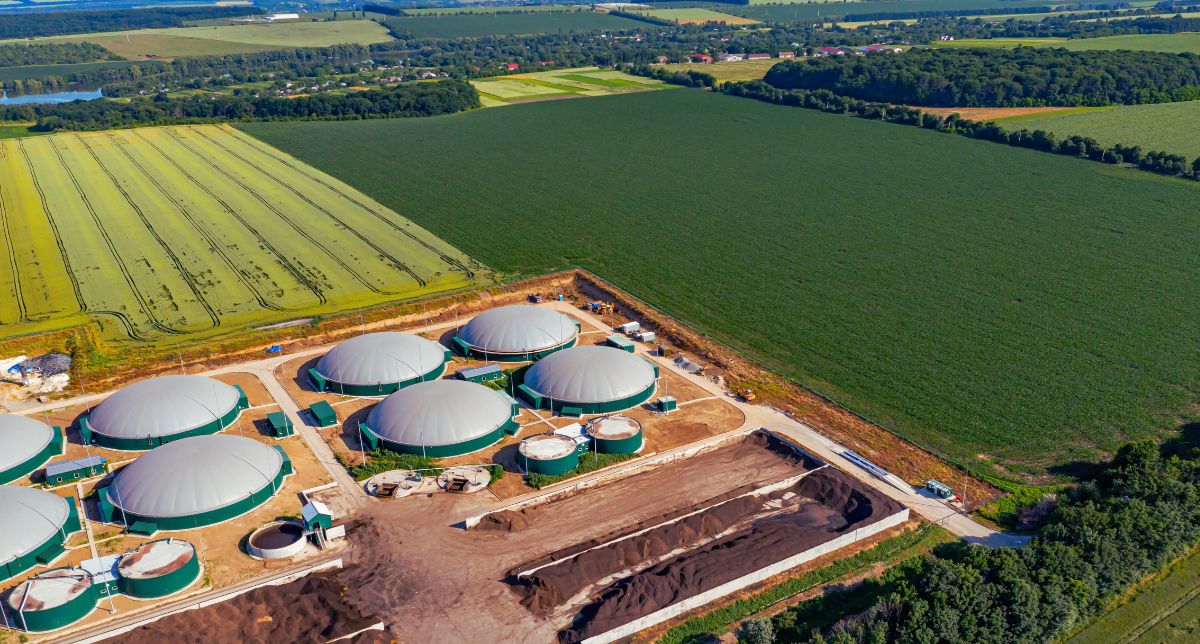
Unlike intermittent sources such as solar and wind, biogas can generate energy continuously. It is produced through the anaerobic decomposition of organic matter, such as in landfills, wastewater treatment plants, and agricultural biogas facilities. This characteristic makes it a renewable energy source capable of providing firm or baseload power: steady electricity that does not depend on weather conditions or momentary solar or wind availability.
Using biogas in generators or hybrid generation systems can replace fossil fuels traditionally used in natural-gas power plants or diesel generators, which often serve as emergency backup for data centers. In fact, many data centers, as part of their resilience strategy, rely on diesel generators to maintain continuity during grid outages. Partially replacing these systems with biogas can reduce a site’s carbon footprint while turning waste into an energy resource.
Another important point is that biogas production can occur near the point of consumption or within distributed microgeneration “pyramids,” reducing the need to move electricity over long distances. This distributed configuration can improve reliability and reduce transmission losses, while also strengthening local economies through job creation in renewable-energy infrastructure.
Biogas compared with other energy sources
Compared with other renewable sources, biogas has attributes that make it particularly well-suited for applications that require firm power. Solar and wind are essential for the energy transition, but their intermittent nature requires complementary solutions, such as batteries or fossil backup—to ensure continuous data center operation. Relying exclusively on solar or wind without robust storage can require building additional capacity, increasing both cost and complexity.
Natural gas has been widely used to power data centers precisely because it provides constant power and is easy to scale to demand. However, natural gas is still a fossil fuel and therefore contributes to greenhouse-gas emissions. Partial or full replacement with biogas reduces these emissions by leveraging a renewable source and capturing methane that, if released without use, has a much higher climate impact.
Compared with solar or wind paired with batteries, biogas can deliver firm power without immediate investment in large-scale storage. Utility-scale batteries remain expensive and, to date, are not economically justified solely to guarantee 24/7 power for AI-intensive operations. High-performance fuel cells are also being tested, but they still tend to be a secondary option compared with biogas or other sources of firm renewable energy.
Integration with corporate ESG strategies
For many corporations, demand for renewable energy is not only an operational issue, it is a core element of their ESG strategies. Technology companies seeking to reduce emissions associated with their operations and improve environmental performance are embedding clean-energy targets into sustainability reports and public commitments. Biogas can be an effective way to demonstrate real reductions in operational emissions, especially when combined with other instruments such as renewable energy credits or long-term power purchase agreements (PPAs).
Some public policies are also linking incentives or “green operation” requirements to tax benefits or regulatory timelines for data centers. In some countries, regulators consider biogas and other renewables eligible to meet public procurement criteria or tax incentives aimed at reducing carbon intensity in the technology sector. This connection between public policy and business strategy creates an environment in which biogas use becomes a competitive advantage and a marker of responsible management.
In addition, the growing willingness of institutional investors to allocate capital to projects with measurable environmental outcomes has accelerated adoption of renewables that provide firm power. The ability to demonstrate a blended energy mix—where biogas plays a baseload renewable role, adds credibility to long-term carbon neutrality goals.
Challenges and outlook
Despite its advantages, integrating biogas as a primary energy source for data centers faces challenges. Biogas production depends on the availability of organic feedstock and on infrastructure such as anaerobic digesters and generation facilities, which can require meaningful upfront investment. The need for stable supply contracts and policies that recognize environmental attributes is another factor that can influence large corporations’ energy planning decisions.
Another limitation is that, in many markets, national energy infrastructure has not been designed to support large-scale distributed biogas generation in an integrated way. Setting up microgrids and arrangements that enable data centers to operate semi-independently from the main grid requires coordination among grid operators, energy producers, and regulatory authorities.
Even so, growing interest in distributed energy solutions, regulatory pressure for renewables, and the evolution of corporate sustainability strategies suggest that biogas could become a key element in energy diversification. The link between AI-intensive operations, baseload requirements, and carbon-reduction commitments creates fertile ground for solutions like biogas to play an expanding role in data center energy supply.
Conclusion
Data center energy demand will continue to grow throughout the decade, driven by the intensification of artificial intelligence and accelerating global digitalization. Meeting that demand with energy sources that are reliable, low-carbon, and aligned with corporate sustainability strategies is a complex challenge that requires integrated solutions. Biogas stands out in this context as a renewable source capable of delivering firm power, reducing emissions, and supporting long-term ESG goals.
Biogas is not just another renewable option—it is an alternative that combines reliability, lower climate impact, and distributed deployment potential. In a world where constant energy is essential for always-on operations and the energy transition is imperative, biogas adoption by data centers represents a convergence of technology, sustainability, and energy security that can help move the sector toward a more resilient and sustainable future.

Comment