

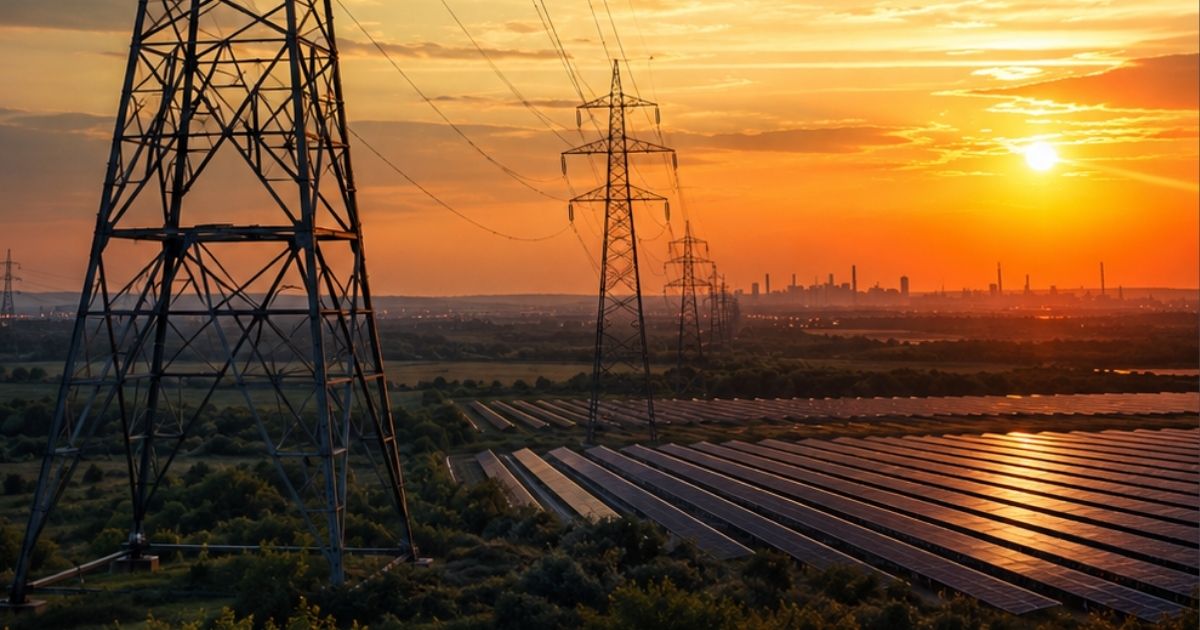
EPE’s new PET/PELP outlines approximately 20,500 kilometers of transmission lines and 81,900 MVA of substation capacity, with projects designed to integrate renewable generation and meet regional market demand
The new Transmission Expansion Program and Long-Term Expansion Plan, known by the Portuguese acronyms PET/PELP, for the first half of 2026 brings together R$ 79.1 billion in projects for Brazil’s National Interconnected System that have already been recommended by planning studies but have not yet been authorized or put out to tender. The portfolio includes approximately 20,500 kilometers of new transmission lines and 81,900 MVA of substation capacity. More than a project pipeline, the document shows that transmission has taken on a strategic role in the expansion of Brazil’s power sector. Without sufficient grid infrastructure, renewable generation cannot be fully integrated, new demand centers face constraints and the system’s operational security becomes increasingly complex.
From generation to infrastructure: the new frontier of the energy transition
For years, the expansion of Brazil’s power sector was presented primarily in terms of the additional capacity provided by solar and wind generation. This growth remains essential, but figures released by the Energy Research Office, EPE, indicate that the next investment cycle will increasingly depend on the infrastructure responsible for transporting and delivering this electricity.
Published on July 9, 2026, the new PET/PELP for the first half of the year consolidates projects recommended in studies completed through May that have not yet been included in authorization or tendering processes. The report already takes into account the results of the first stage of Transmission Auction No. 1/2026, held in March.
Estimated investment in the planned expansions totals R$ 79.1 billion. Of this amount, R$ 49 billion, equivalent to 62%, is associated with transmission lines. Another R$ 30.1 billion, or 38%, relates to substations and the equipment required to transform, control and direct electricity flows.
The amount represents a significant change from the previous cycle. In the first-half 2025 edition, the portfolio totaled R$ 39.1 billion. In nominal terms, the value increased by approximately 102% between the two documents, rising to slightly more than double within one year. This comparison, however, should not be interpreted as annual growth in investments that have actually been carried out. Each edition incorporates new studies and removes projects that have already progressed to authorization or tendering, changing the composition of the portfolio.
This methodological distinction is important. The PET/PELP is neither an immediate expenditure budget nor a list of projects that have already been contracted. It serves as an updated snapshot of the projects that have been studied and recommended, providing the government, industry participants and investors with a view of the grid’s future requirements.
More than half of the investment is linked to integrating new generation
One of the report’s most revealing findings concerns the purpose of the projects. Approximately R$ 42.9 billion, corresponding to 54% of the total, is related to projects originally planned to transmit power from generation facilities and expand interconnections between regions. The remaining R$ 36.2 billion, or 46%, is primarily intended to meet the needs of regional markets.
This distribution shows that transmission is no longer infrastructure that simply follows the growth of generation. It has become a prerequisite for new projects to operate efficiently.
Renewable generation is often expanding far from Brazil’s largest consumption centers. The Northeast has high-quality solar and wind resources, while a large share of electricity demand remains concentrated in the Southeast and Central-West regions. This geographic separation requires transmission corridors capable of carrying large volumes of electricity, managing flows between market zones and preserving the stability of the National Interconnected System.
When grid development fails to keep pace with generation, the risks of operational restrictions, delayed connections and temporary limitations on output from certain power plants increase. The challenge is no longer limited to building renewable capacity. It also involves ensuring that this electricity can effectively be integrated into the system.
Southeast and Central-West account for nearly half of the portfolio
The largest share of investment is concentrated in the Southeast/Central-West market zone, which accounts for R$ 38.7 billion, equivalent to 49% of the total. The Northeast follows with R$ 19.7 billion, or 25%. The South represents R$ 15.6 billion, corresponding to 20%, while the North accounts for R$ 5.1 billion, or 6%.
The concentration of investment in the Southeast/Central-West does not mean that the resources are intended exclusively for generation located in those regions. Interconnection lines benefit different parts of the country by enabling electricity exchanges and increasing the system’s ability to respond to regional variations in generation and consumption.
The report itself notes that new structural studies planned for the North region are expected to be incorporated into future editions. As a result, the market zone’s share of projected investment may increase as these studies are completed.
Grid to gain 20,500 kilometers of transmission lines
Over the period analyzed by EPE, the projected physical expansion amounts to approximately 20,500 kilometers of new transmission lines. Of the R$ 49 billion allocated to these facilities, R$ 46.5 billion, or 95%, relates to projects expected to be awarded through competitive tenders. Only 5% corresponds to projects that are expected to proceed under the authorization regime.
For substations, the plan provides for the addition of approximately 81,900 MVA of capacity. Of the R$ 30.1 billion expected to be invested in these facilities, R$ 20.7 billion, equivalent to 69%, is associated with projects eligible for competitive tendering. Another R$ 9.4 billion, or 31%, is expected to be implemented through authorizations.
Transmission lines are the most visible component of the transmission system, but substations play an equally critical role. They adjust voltage levels, organize power flows, connect different facilities and expand the system’s ability to meet demand. A larger grid without adequate substations and control equipment does not, by itself, ensure greater reliability.
PET and PELP cover different decision-making horizons
Although they are presented in the same document, the Transmission Expansion Program and the Long-Term Expansion Plan serve different purposes.
In the 2026 cycle, the PET is determinative in nature and covers projects whose need has been identified for the following six years, through 2032. The PELP includes facilities whose systemic need is expected to emerge from 2033 onward. These projects are indicative in nature and may be reassessed in subsequent planning cycles as electricity demand, generation, technologies and system operating conditions evolve.
This periodic update reduces the risk of treating long-term projections as immutable decisions. Planning must respond to the connection of new industrial loads, the electrification of economic activities, distributed generation, low-carbon hydrogen projects and the advancement of technologies such as energy storage and reactive power compensation.
The amounts presented in the report were estimated using the Reference Price Database maintained by the Brazilian Electricity Regulatory Agency, ANEEL, and updated to January 2026. For special facilities not covered by this database, EPE used the costs indicated in the original studies, also adjusted for inflation.
Most tenders are expected to take place from 2027 onward
Among the facilities classified as eligible for competitive tendering, the PET/PELP estimates that approximately R$ 11 billion is associated with the second stage of Transmission Auction No. 1/2026 and Transmission Auction No. 2/2026. Another R$ 56.2 billion, equivalent to 84% of the tenderable portfolio, is expected to be allocated to auctions scheduled for 2027 and beyond.
Brazil’s first transmission auction of 2026 was divided into two sessions. The first, held in March, included five lots with estimated investment of R$ 3.3 billion. The second, concluded on July 3, included four lots and R$ 1.8 billion in investment. In total, the auction awarded nine lots covering 859 kilometers of transmission lines and 4,350 MVA of transformation capacity.
Progress from technical studies to physical construction, however, depends on an extensive chain of decisions. Following the recommendations prepared by EPE, the projects are consolidated by the Ministry of Mines and Energy, MME, in its concession and authorization plans before proceeding to authorization processes or auctions organized by ANEEL.
In July, the MME also opened a public consultation on the 2026 Electricity Transmission Concession and Authorization Plan, known by its Portuguese acronym POTEE. The plan brings together technical recommendations based on studies prepared by EPE and Brazil’s National Electric System Operator, ONS. Once finalized, it will serve as the basis for the regulatory processes conducted by ANEEL.
One of the projects included in the plan is the Northeast 2 Bipole, a new high-voltage direct-current interconnection between the Northeast and Southeast using HVDC-VSC technology. According to the MME, the solution is expected to improve power-flow control, strengthen system stability and support the integration of solar and wind generation. It will also prepare the grid for new electricity-intensive loads, including data centers and low-carbon hydrogen projects.
Transmission as a strategic asset
The main message of the PET/PELP extends beyond the R$ 79.1 billion investment figure. It lies in the changing scale and function assigned to the electricity grid.
Transmission is now expected to address three challenges simultaneously: enabling the delivery of renewable generation, supporting growth in regional markets and increasing electricity exchange capacity between different parts of the country. This infrastructure has a direct impact on energy security, industrial competitiveness, the location of new investments and the utilization of renewable energy resources.
Brazil has developed an electricity mix characterized by a high share of renewable sources. The next stage will depend on transforming this generation advantage into the effective availability of electricity at the locations and times when it is needed.
In this context, transmission lines and substations are moving out of the background of the power sector. They are becoming the infrastructure that will determine how much renewable expansion can actually be utilized, the level of security under which it can be integrated and the cost at which electricity can be delivered to consumers and productive activities.

Comment