

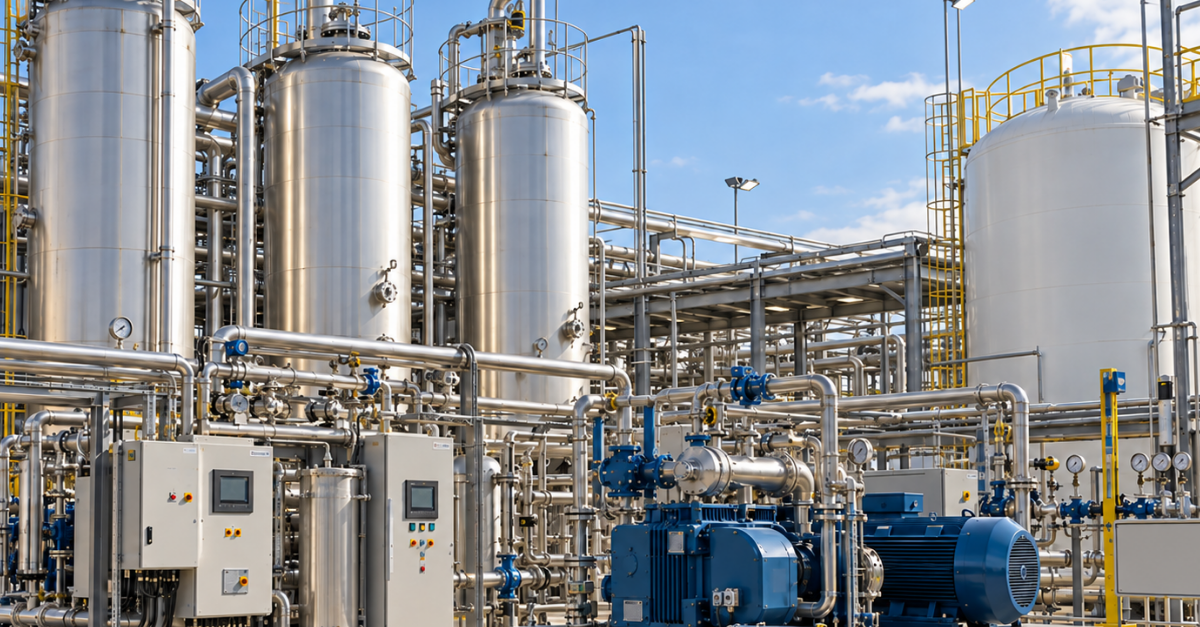
Organic waste is generated daily by agricultural, livestock, agro-industrial, industrial, and wastewater treatment activities. Although often associated with treatment and disposal costs, these materials can also serve as resources for energy production, provided they have suitable characteristics and undergo specific technological processes.
Energy recovery from waste is part of a broader set of solutions associated with the circular economy, a concept aimed at preserving resource value and reducing waste throughout production chains. In this context, organic materials that would otherwise be sent exclusively for treatment or final disposal can serve as feedstock for biogas production.
Biogas is a gaseous mixture produced through the decomposition of organic matter in the absence of oxygen. Its main energy-bearing component is methane, which can be used to produce heat, generate electricity, or, after purification, produce biomethane.
This opportunity brings together two important challenges facing the Brazilian economy: proper waste management and the need to expand lower-carbon energy alternatives.
However, converting waste into energy involves more than simply installing power generation equipment. The process requires an understanding of feedstock characteristics, biological process control, treatment infrastructure, purification technologies, and an assessment of energy recovery conditions.
What Is Energy Recovery from Waste?
Energy recovery involves harnessing the energy content of certain materials that would otherwise be treated as waste, using technologies suited to their characteristics.
For biodegradable organic waste, one of the main alternatives is anaerobic digestion, a biological process that converts part of the organic matter into biogas.
This technology can be applied to waste treatment across different activities, including livestock farming, food processing, the sugar and bioenergy industry, wastewater treatment plants, and certain agro-industrial operations.
The potential for energy recovery depends on waste composition, the presence of substances that may interfere with the process, the quantity available, and the consistency of supply.
Not all organic waste offers the same conditions for energy production. Materials containing different proportions of carbohydrates, proteins, lipids, fibers, and moisture behave differently during decomposition.
For this reason, feedstock characterization is an important step in selecting the appropriate technology and sizing the facilities.
Energy recovery must also be understood within a broader waste management strategy. Recovering energy does not automatically replace other environmentally appropriate practices, such as waste prevention, reuse, and recycling.
Its contribution lies in the possibility of recovering energy from organic fractions that can be processed in a technically and economically appropriate manner.
What Is Biogas and How Is It Produced?
Biogas is primarily produced by microorganisms that break down organic matter in oxygen-free environments.
This process occurs naturally in certain environments, but it can also be carried out in facilities designed to control decomposition conditions and collect the gas produced.
The resulting mixture consists mainly of methane and carbon dioxide, along with other components in varying concentrations, such as water vapor and hydrogen sulfide.
The proportions of these components depend on the feedstock used, operating conditions, and the technology employed.
Methane accounts for much of the energy potential of biogas. Because it is combustible, it allows the gas to be used in suitable equipment for heat or electricity generation.
Controlled biogas recovery can also help prevent the direct release of methane into the atmosphere, provided the system performs adequately in capturing, treating, and using the gas.
This is environmentally significant because methane is a greenhouse gas with a high global warming potential.
However, actual emissions reductions must be demonstrated through an appropriate assessment that considers both the emissions that would occur without the project and those associated with implementing and operating the system.
How Does Anaerobic Digestion Work?
Anaerobic digestion is a biological process involving different stages of organic matter transformation.
These stages are carried out by communities of microorganisms working together to convert complex organic compounds into simpler substances and, subsequently, into biogas.
The process can be conceptually divided into four main stages: hydrolysis, acidogenesis, acetogenesis, and methanogenesis.
During hydrolysis, complex organic molecules are broken down into smaller compounds that microorganisms can use in subsequent stages. During acidogenesis, these compounds are transformed into various intermediate products, including organic acids.
During acetogenesis, some of these substances are converted into compounds that methane-producing microorganisms can use. Methanogenesis is the stage in which certain microorganisms convert the available substrates into methane and other products.
Although this description presents the stages in a logical sequence, these transformations occur interdependently within the system.
Maintaining balance among microbial communities is essential for operational stability.
Excessive temperature fluctuations, changes in pH, the accumulation of intermediate compounds, or the presence of inhibitory substances can compromise process performance.
For this reason, biogas production requires biological monitoring and process control, as well as suitable equipment.
The Role of Anaerobic Digesters in Energy Production
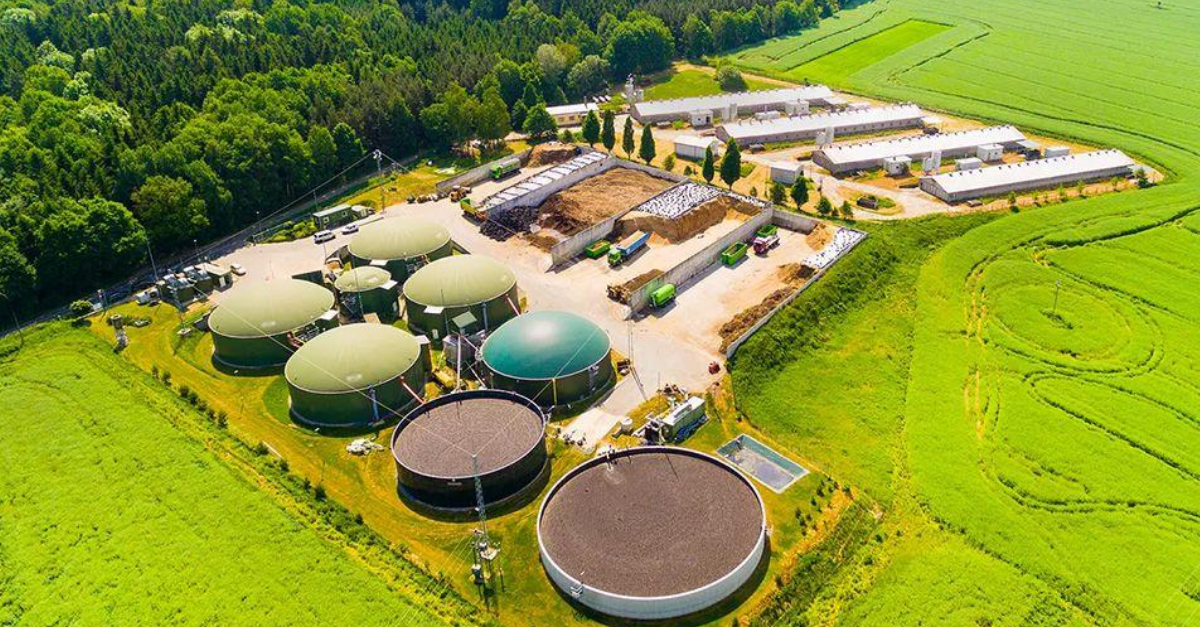
An anaerobic digester is the equipment or set of structures in which organic matter undergoes anaerobic digestion under controlled conditions.
Different digester configurations are available, designed according to waste characteristics, the volume of material treated, and the objectives of the facility.
Some systems are designed for waste with higher moisture content, while others can operate with materials containing higher concentrations of solids.
Technology selection considers factors such as retention time, operating temperature, mixing requirements, organic matter concentration, and supply stability.
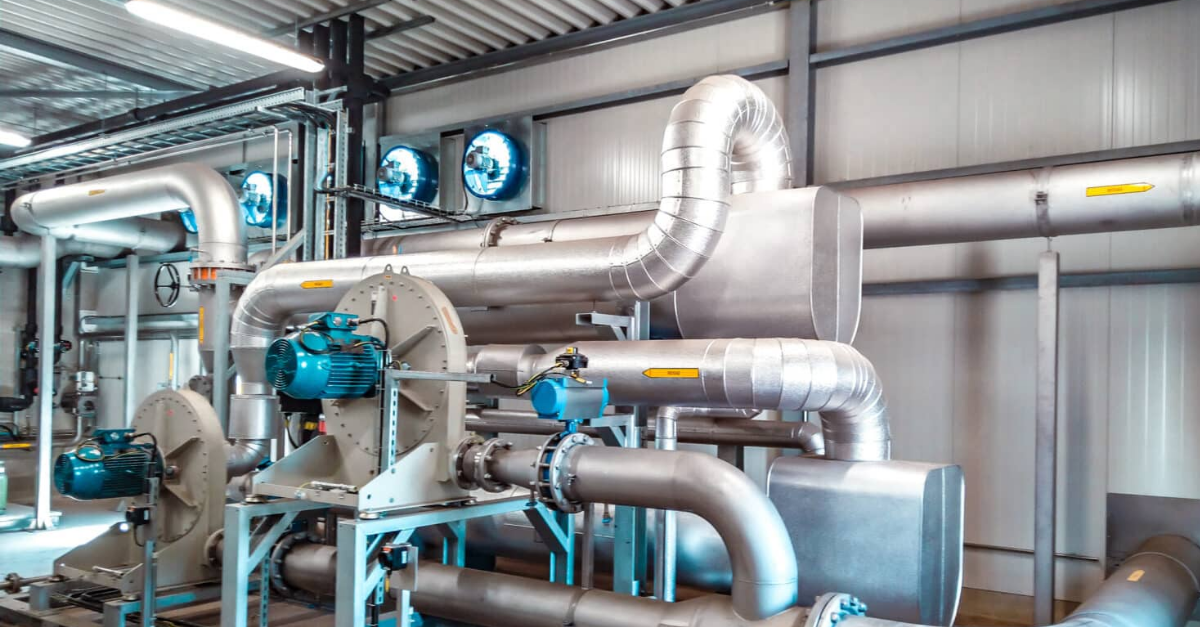
In industrial facilities, anaerobic digesters can be integrated into broader systems for treatment, gas storage, contaminant removal, and energy recovery.
Proper system sizing is important to avoid both equipment underutilization and operating conditions that are incompatible with the organic load received.
Operations must also incorporate safety procedures, since biogas contains flammable components and may contain toxic substances such as hydrogen sulfide.
Digester efficiency therefore depends on a combination of engineering, microbiological control, feedstock quality, and operational management.
What Types of Waste Can Be Used to Produce Biogas?
Biogas can be produced from different types of biodegradable organic waste, provided their physical, chemical, and biological characteristics are properly evaluated.
Potential feedstocks include animal manure, food processing waste, agro-industrial effluents, sludge from wastewater treatment plants, and organic fractions of municipal waste.
In agriculture and livestock farming, animal manure can provide a regular source of organic matter, depending on the scale and type of farming operation.
In agro-industrial activities, certain waste streams and effluents offer energy recovery potential because they contain organic compounds that can be biologically degraded.
In the sugar and bioenergy sector, vinasse and other byproducts may also be considered for biogas production projects, depending on their characteristics and treatment conditions.
In wastewater management, anaerobic digestion can be integrated into sludge stabilization and effluent treatment processes.
Feedstock selection influences the quantity and composition of the gas produced, pretreatment requirements, and the management of the remaining material.
In some projects, different waste streams can be combined through a process known as co-digestion.
Under certain conditions, this strategy can improve nutrient balance and utilization of installed capacity, but it requires technical assessment to prevent incompatibilities between materials.
Waste availability must also be evaluated over time. Seasonal variations, changes in industrial production, and logistical challenges can affect a plant’s feedstock supply.
Therefore, energy potential depends not only on the amount of organic matter available but also on the ability to supply it regularly under suitable conditions.
What Is the Difference Between Biogas and Biomethane?
Although closely related, biogas and biomethane are not identical products.
Biogas is the gaseous mixture obtained through the anaerobic decomposition of organic matter. Its composition varies depending on the origin of the waste and the conditions of the process.
Biomethane is produced by treating and purifying biogas, removing components that must be reduced to meet the quality standards required for specific applications.
This treatment is commonly known as upgrading.
During this process, systems are used to remove a significant portion of the carbon dioxide and other unwanted components, increasing the methane concentration.
The resulting product can have properties compatible with various natural gas applications, provided it meets the relevant technical and regulatory specifications.
In Brazil, the National Agency of Petroleum, Natural Gas and Biofuels (ANP) regulates the quality of commercially available biomethane.
In August 2026, the agency published ANP Resolution No. 1,006/2026, which consolidated and updated the product’s quality specifications and quality control rules, replacing Resolutions No. 886/2022 and No. 906/2022.
Regulation is important because it establishes quality parameters and control requirements for the safe commercialization of biomethane.
The distinction between the two gases also influences project design. While biogas can be used directly in certain applications near its production site, biomethane commercialization requires additional processing steps and compliance with applicable requirements.
How Can Biogas Be Used to Generate Electricity?
One application of biogas is its use as a fuel in electricity generation equipment.
In this model, the gas produced through anaerobic digestion undergoes treatment to meet equipment requirements and is directed to systems capable of converting its chemical energy into electricity.
Internal combustion engines coupled with generators are among the technologies used for this purpose.
The electricity produced can meet the facility’s own needs or be supplied for other applications, subject to technical, contractual, and regulatory conditions.
In certain configurations, the heat generated during equipment operation can also be recovered and used.
This combined production of electricity and useful heat is known as cogeneration.
Thermal energy recovery can increase overall fuel utilization efficiency when there is sufficient demand for the recovered heat.
In industrial facilities, this approach can be particularly relevant for processes that require both electricity and thermal energy.
However, feasibility depends on the consistency of gas production, energy demand characteristics, and installation and maintenance costs.
The use of biogas also requires attention to contaminants that can cause corrosion, wear, or reduced equipment service life.
For this reason, gas treatment before power generation is an important part of project design.
How Can Biomethane Be Used in Industry?
After purification and compliance with the required specifications, biomethane can be used as a fuel in applications compatible with its characteristics.
Potential applications include industrial processes that use gaseous fuels, power generation, and vehicle fuel applications.
One of its significant characteristics is the potential to replace fossil natural gas in certain applications, provided quality, pressure, infrastructure, and operational requirements are met.
Biomethane can be supplied through gas networks where infrastructure is available and regulatory conditions allow connection, or through suitable alternative logistics solutions.
The ANP also recognizes transportation options involving compressed or liquefied biomethane, subject to applicable technical conditions.
For industries that rely on gaseous fuels, this alternative can support energy diversification and emissions reduction strategies.
However, climate benefits must be assessed across the entire production and supply chain, including feedstock origin, processing energy consumption, and potential methane losses.
The proximity between production facilities and consumers also influences logistics costs and competitiveness.
Industrial biomethane use therefore depends on the integration of production, purification, distribution, contracts, and demand.
What Happens to the Material Remaining in the Anaerobic Digester?
Anaerobic digestion does not convert all organic matter into biogas.
At the end of the process, a material known as digestate remains. It consists of water, residual organic matter, nutrients, and other components originally present in the feedstock.
Depending on its characteristics and treatment conditions, digestate may have potential agricultural applications.
However, its use is not automatic. Its composition, contaminant levels, sanitary characteristics, and compliance with applicable environmental and agronomic requirements must be evaluated.
In certain systems, digestate may undergo solid-liquid separation, additional treatment, storage, or other procedures before its final use or disposal.
Proper management of this material can contribute to nutrient recovery strategies and waste reduction.
Conversely, improper disposal can cause environmental impacts, including soil and water contamination.
This demonstrates that biogas production must be planned as an integrated materials management system rather than simply an energy generation facility.
How Are Biogas, the Circular Economy, and Decarbonization Connected?
The circular economy promotes an approach in which materials and resources remain in use for as long as possible while retaining their value, reducing losses and the need to extract new resources.
For organic waste, anaerobic digestion can support this approach by recovering part of the energy contained in biodegradable materials.
When integrated into an appropriate waste management strategy, the technology can connect environmental treatment, energy production, and, under certain conditions, nutrient recovery.
Its contribution to decarbonization depends on the characteristics of each project.
Capturing and using methane that would otherwise be released under a baseline scenario can deliver significant climate benefits. Replacing fossil fuels can also help reduce emissions, depending on gas production and utilization conditions.
However, these contributions must be assessed using technical criteria.
Fugitive methane emissions, energy consumption during purification, waste transportation, and improper digestate management can reduce environmental benefits.
For this reason, life cycle assessments and emissions inventories are important tools for quantifying results and avoiding unsubstantiated environmental claims.
The relationship between biogas and sustainability should not be presented as an automatic outcome of the technology. It depends on the actual performance of the entire value chain.
What Determines the Feasibility of a Biogas Plant?
Developing a biogas plant involves technical, economic, environmental, and logistical decisions.
One of the first considerations is the availability of feedstock in sufficient quantity and quality.
The presence of waste in a particular region does not necessarily mean that all of it can be used economically.
The distance between waste generation sites and the treatment facility, transportation requirements, organic matter concentration, and supply consistency all influence project sizing.
Another important consideration is defining the intended energy application.
Projects designed for electricity generation may have different configurations from those intended for biomethane production and commercialization.
In the latter case, purification, compression, storage, transportation, and compliance with regulatory specifications may involve additional steps.
Product demand must also be considered from the development stage.
A plant with the technical capacity to produce gas will not necessarily be competitive without consumers, contracts, or suitable logistics arrangements for gas utilization.
Operating and maintenance costs, the need for specialized personnel, and byproduct management are also part of the assessment.
Therefore, plant feasibility depends on a combination of factors that extends beyond the efficiency of the anaerobic digester alone.
Biomethane Regulation in Brazil
The development of Brazil’s biomethane market has gained new regulatory instruments associated with decarbonization policy.
Law No. 14,993/2024, known as the Fuel of the Future Law, established measures to encourage the use of lower-carbon fuels, including biomethane.
Under this policy, the ANP published regulations in 2026 addressing the allocation of targets to individual obligated entities and certification of origin.
These include ANP Resolution No. 995/2026 and ANP Resolution No. 996/2026, which address, respectively, mandatory targets applicable to covered entities and the certification procedures required for issuing the Biomethane Certificate of Guarantee of Origin (CGOB).
The CGOB is a traceability instrument associated with the volume of biomethane produced and commercialized, subject to the conditions established by regulation.
Its purpose is to provide proof of origin within the regulatory program.
Certification should not be confused with an automatic declaration of climate neutrality or the absence of emissions throughout the product’s life cycle.
For producers and investors, regulatory developments introduce compliance requirements and traceability mechanisms that must be incorporated into project planning and structuring.
The ANP provides technical bulletins on CGOB issuance, including guidance for entities involved in the certification process.
The Role of Biogas in Brazil’s Energy Infrastructure
Energy recovery from waste offers opportunities that go beyond environmentally appropriate organic waste disposal.
Where favorable technical and economic conditions exist, biogas production can connect agro-industrial activities, wastewater treatment systems, and industrial facilities to an energy production chain.
An important characteristic of this technology is its relationship with feedstock availability. Unlike energy sources whose output depends directly on weather conditions, biogas-based generation can offer greater scheduling flexibility when feedstock supply and operations are properly controlled.
This does not mean unlimited availability or the absence of constraints. Continuity depends on digester operation, gas production, storage systems, and equipment maintenance.
Plant location can also support production models close to waste sources and energy consumption points.
In certain situations, this proximity makes it possible to integrate waste treatment and energy recovery within the same operation or industrial region.
However, implementation must account for infrastructure, permitting, logistics, safety, and financial feasibility.
The role of biogas in the energy transition lies precisely in its ability to combine different functions: organic matter treatment, energy recovery, and the supply of renewable fuel.
Converting Waste into Energy Requires Integrated Planning
Biogas and biomethane production demonstrates how waste management can be connected to the development of new energy alternatives.
The process begins with identifying and characterizing feedstock, continues through anaerobic digestion and gas treatment, and ultimately leads to opportunities for energy utilization.
Each stage requires technical and operational decisions that influence efficiency, costs, and environmental performance.
Advances in Brazilian regulation also reinforce the need to incorporate quality, traceability, and compliance into projects intended for biomethane commercialization.
For energy recovery from waste to make an effective contribution to the circular economy and decarbonization, the entire value chain must be assessed, from waste generation to final energy use and byproduct management.
The technology offers important opportunities, but its results depend on actual implementation and operating conditions.
The energy value of waste lies not only in its capacity to produce gas, but also in its potential to integrate environmental management, productive efficiency, and responsible resource utilization within a technically feasible system.
