

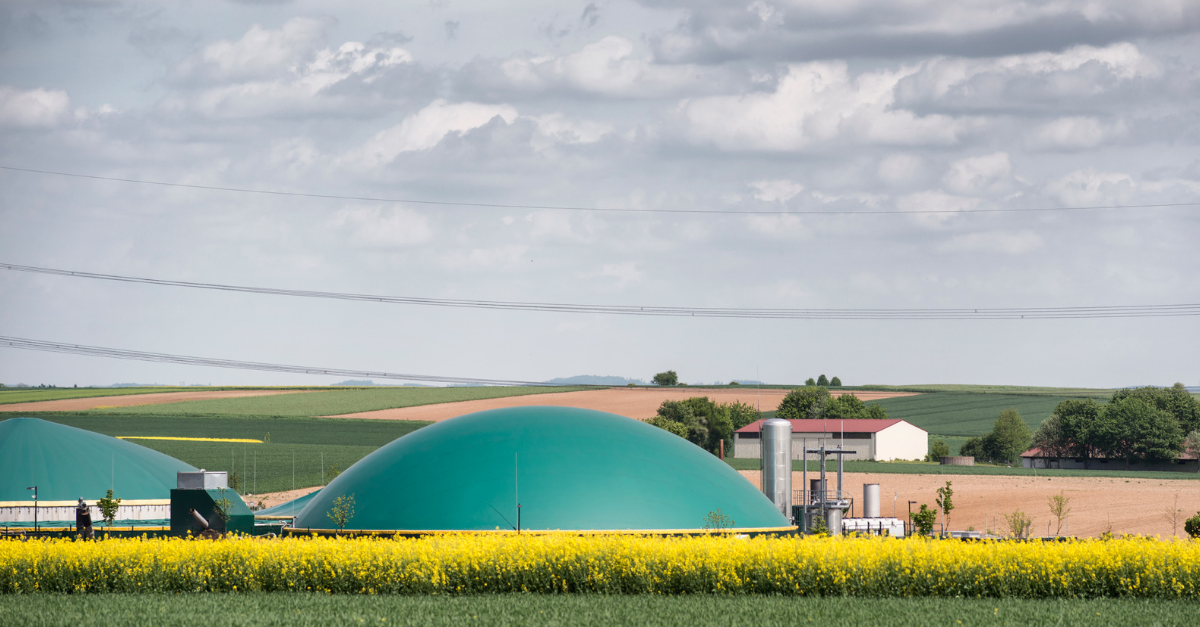
The potential to turn organic waste into energy is often associated with feedstock availability. But there is a question that comes before technology, equipment, and even production capacity: where is this waste located, and how can it be put to productive use?
Waste has a location. And that location can directly influence the viability of an energy project.
Two regions with similar volumes of waste may offer entirely different conditions for developing a biogas or biomethane plant. The distance between feedstock sources, supply consistency, waste characteristics, and proximity to consumers all influence investment decisions.
This means that energy potential should not be assessed solely on the amount of organic matter available. It is essential to understand the local geography, existing infrastructure, and organization of economic activities that can support the project throughout its operational life.
Energy potential begins at the source of the feedstock
Biogas is primarily produced through the decomposition of organic matter under anaerobic conditions, meaning in the absence of oxygen. It contains methane, carbon dioxide, and other components in proportions that vary depending on the material used and the process conditions.
Following appropriate purification processes, biogas can be upgraded into biomethane, a renewable fuel with characteristics similar to natural gas that can serve a range of energy applications.
According to Brazil’s Ministry of Mines and Energy, feedstock sources used in Brazil include waste from agricultural and livestock activities, the sugar and bioenergy industry, landfills, wastewater treatment plants, and industrial processes.
This diversity expands the opportunities for energy recovery but also requires specific assessments. Waste from different sources does not necessarily have the same composition, availability, or behavior during anaerobic digestion.
The presence of waste is the starting point. Whether it can effectively sustain an energy operation depends on additional conditions.
Why can location change a plant’s viability?
Consider two regions with substantial agro-industrial activity. In the first, a significant share of waste is concentrated in a small number of production facilities located close to one another. In the second, materials are spread across distant properties, with varying volumes and generation cycles.
Even if their total technical potential is similar, the challenges involved in collection, transportation, storage, and processing may be very different.
This hypothetical example illustrates a fundamental issue: location determines some of the conditions required to turn an available resource into energy production.
During the preliminary assessment of a project, several factors deserve attention:
- Feedstock concentration: how much waste can be collected within an operationally accessible area?
- Supply consistency: is the volume available year-round, or does it depend on production cycles?
- Waste characteristics: are its composition, moisture content, and potential contaminants compatible with the selected process?
- Logistics infrastructure: what are the road conditions, transportation distances, and storage requirements?
- End-use destinations: where are the potential consumers of energy, biomethane, and other recoverable products?
- Site conditions: which environmental requirements, water availability constraints, and development restrictions must be considered?
None of these factors alone determines whether a project will be approved or economically viable. The outcome depends on their combined effects, the operating model adopted, and the underlying investment assumptions.
The cost of transporting waste is also part of the equation
Regions may have significant organic waste generation potential and still face difficulties establishing a competitive supply chain.
Transporting materials with high moisture content, for example, may involve moving large quantities of material to recover a relatively small fraction that can actually be converted into energy. Longer distances can also increase the need for vehicles, fuel, maintenance, and logistics coordination.
For this reason, plant location must be assessed alongside the location of feedstock suppliers. Centralizing all processing at a single facility may be advantageous under certain circumstances. In others, decentralized solutions or pre-treatment arrangements may warrant consideration.
The choice depends on local conditions and should not be based on a universal rule.
Even a technically well-designed plant may face economic challenges if its feedstock logistics are inadequate.
Supply disruption risks must also be considered. A project that relies on multiple producers needs to assess how delivery commitments, quality standards, operational responsibilities, and contingency measures will be structured.
Producing biomethane is one decision. Delivering it to consumers is another.
When the goal is biomethane production, geographic considerations do not end when waste arrives at the plant. The fuel must reach its intended destination under suitable technical, regulatory, and economic conditions.
In June 2026, Brazil’s Energy Research Office (EPE) published the study Compressed Natural Gas Transportation – A Case Study of Biomethane in Brazil.
The study examines conceptual aspects of logistics, costs, and greenhouse gas emissions associated with transporting compressed biomethane by truck to consumption points.
This discussion is particularly relevant because not every project is located near pipeline infrastructure that is available and technically suitable for connection.
Depending on the project’s location and operating conditions, potential alternatives for assessment include:
- Local consumption: using the energy near the production facility, where technically appropriate.
- Road transportation of compressed gas: delivering biomethane to consumers or delivery points using dedicated logistics infrastructure.
- Connection to the gas network: an option subject to infrastructure availability, technical requirements, gas quality specifications, and other applicable conditions.
No single alternative is automatically superior. Distance, production scale, demand characteristics, and required investments must be evaluated together.
This assessment highlights the geographic dimension of a plant’s potential market. Demand for the fuel alone is not enough; there must also be a technically feasible and economically sustainable way to meet it.
Quality and safety are essential to turning biogas into fuel
Upgrading biogas into biomethane requires treatment and quality control processes to meet the specifications applicable to the fuel and its intended use.
In August 2026, Brazil’s National Agency of Petroleum, Natural Gas and Biofuels (ANP) announced ANP Resolution No. 1,006/2026, designed to consolidate and update biomethane specification and quality control requirements.
The existence of regulatory standards demonstrates that energy production must be supported by monitoring, treatment, and quality assurance processes.
For project developers, this means incorporating equipment, analytical routines, operational procedures, and compliance costs into project planning. The choice of purification process must account for raw biogas composition, intended end use, and applicable requirements.
Turning waste into a commercially viable fuel requires a series of technical decisions, not simply the installation of an anaerobic digester.
Geography also shapes the business model
Waste-to-energy projects may bring together a range of economic stakeholders, including waste generators, plant operators, technology providers, transportation companies, industrial consumers, and financial institutions.
The relationships among these participants influence how responsibilities and risks are allocated. One company may generate waste without having an interest in operating a plant. Another may provide technical expertise, while an industrial consumer may offer an opportunity for a long-term supply agreement.
Depending on the project, contractual arrangements may need to define matters such as:
- Terms and conditions for waste supply and acceptance.
- Responsibility for collection, transportation, and pre-treatment.
- Quality requirements and procedures for handling unsuitable materials.
- Allocation of operating costs and capital investments.
- Commercialization of biomethane and other products.
- Management of supply interruption, volume, and performance risks.
These provisions help reduce uncertainty and establish clear responsibilities. However, the most appropriate structure depends on each project’s specific characteristics and governance arrangements.
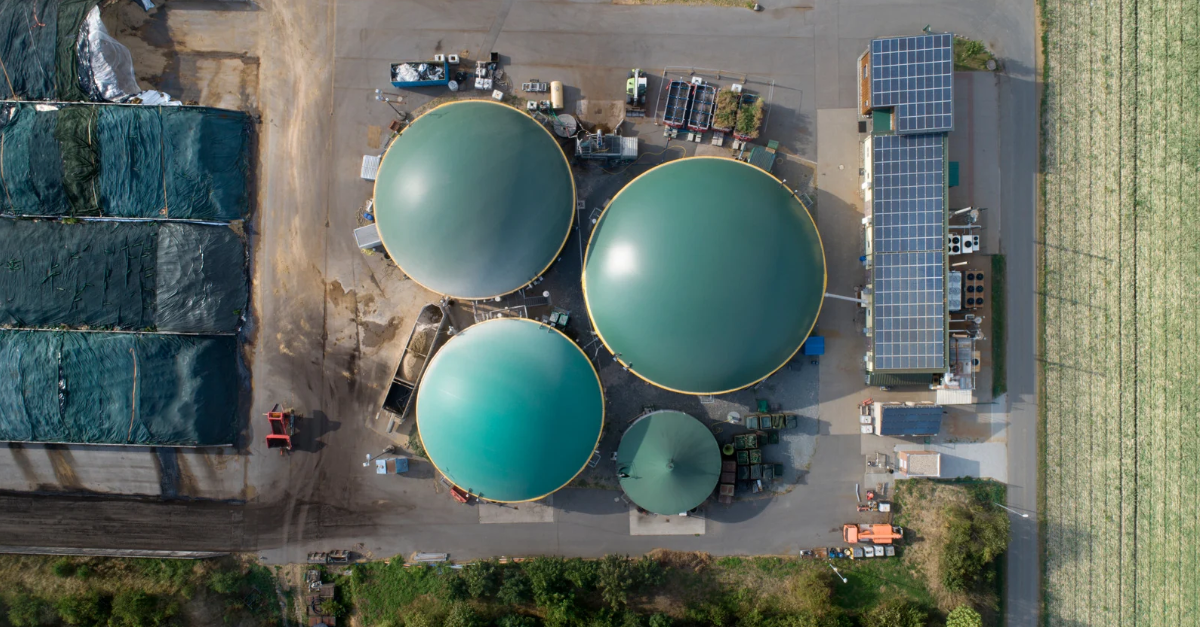
A circular economy requires planning beyond energy generation
Recovering energy from waste is associated with the concept of a circular economy. However, converting organic matter into energy does not, by itself, demonstrate the sustainability of the entire operation.
Assessments must consider prior waste treatment, transportation, potential methane losses, equipment energy consumption, residual materials generated by the process, and their environmentally appropriate management.
Digestate, the material remaining after anaerobic digestion, may offer opportunities for beneficial use, including agricultural applications, depending on its composition, treatment, and compliance with relevant technical and legal requirements.
A circularity assessment must therefore consider the material’s entire life cycle, from its origin to the final destination of every product and by-product.
Environmental viability and climate benefits should be demonstrated using consistent methodologies, clearly defined assessment boundaries, and verifiable data. It is not technically appropriate to claim that every biogas project has zero emissions or delivers identical environmental benefits.
What distinguishes technical potential from an investment opportunity?
Technical potential indicates the possibility of producing energy under a given set of assumptions. An investment opportunity requires demonstrating that production, distribution, and commercialization can take place under conditions consistent with expected risks and returns.
Making that transition involves technical studies, environmental permitting, contracts, cost estimates, demand assessments, capital structure, and clearly defined responsibilities.
The BNDES Finem – Environment financing program includes, among its eligible investment areas, projects related to biogas and biomethane production and utilization, subject to the conditions of each financing arrangement.
The availability of financing mechanisms does not guarantee approval. Credit decisions require an assessment of the project, collateral, risks, repayment capacity, and applicable conditions.
For this reason, developing a plant requires more than demonstrating feedstock availability. It requires presenting a viable proposal capable of sustaining operations over time.
From waste availability to the development of energy value chains
Discussions about biogas and biomethane often begin with the question of how much energy can be produced. That information matters, but it does not tell the whole story.
It is equally important to ask where the resources are located, who can supply them, what infrastructure is available, how the fuel will be transported, and who will ultimately use it.
These questions connect energy, agribusiness, sanitation, logistics, environmental management, and regional planning.
The energy value of waste lies not only in the material available, but also in the ability to build a value chain that connects its source to a productive application.
That connection is what distinguishes identified potential from a project genuinely ready to move forward.
When geography is recognized as part of energy infrastructure, the discussion moves beyond simply turning waste into gas. It becomes a question of how to organize resources, investments, and economic activities to make that transformation viable.
Because waste has a location. And understanding that location is one of the first decisions for anyone seeking to turn it into energy.
