

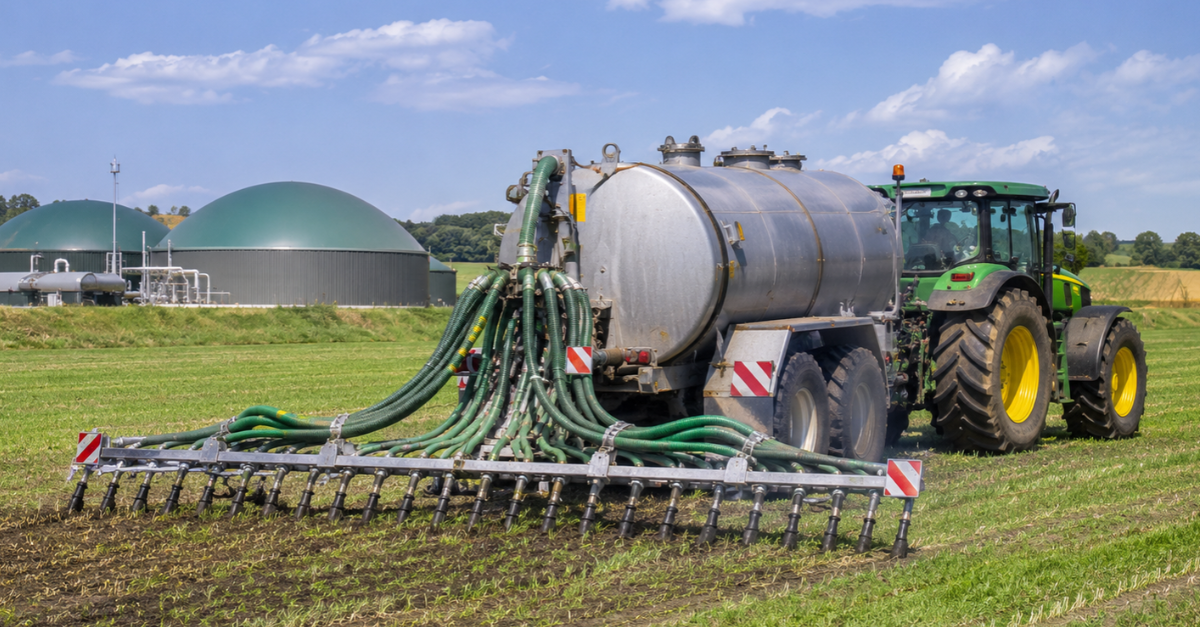
After biogas is produced, what happens to the material left behind?
Producing biogas does not make all organic matter disappear. The material that remains also needs a clearly defined destination as part of the project.
This aspect of operations often receives less attention than the gas itself, the engines, or the purification equipment. Yet it is a daily part of the production process and requires decisions about storage, quality, transportation, and end use. A biogas plant’s responsibilities do not end when organic matter is converted into energy. Its successful operation also depends on how it manages the materials that remain after that conversion.
Digestate is one of those materials. Produced through anaerobic digestion, it can contain nutrients and organic matter with potential agricultural applications. However, that potential must be demonstrated and supported by appropriate planning. Simply identifying a material as digestate does not guarantee its quality, suitability for a particular crop, or eligibility for classification as a commercial fertilizer.
For developers, investors, and operators, the key question arises well before the plant begins operating: what material will the facility produce, in what quantities, and through which technically viable pathways can it be managed or used? The answer affects infrastructure requirements, recurring costs, and the project’s overall environmental performance.
What is anaerobic digestate?
Digestate is the material remaining after anaerobic digestion, a process in which microorganisms break down part of the organic matter in an oxygen-free environment. While biogas is collected, a separate material stream leaves the system containing water, mineral constituents, and residual organic matter.
Embrapa Swine and Poultry describes digestate in the context of manure processing and outlines opportunities for using it as a raw material in fertilizer production. The publication also explains that beneficial use may require physical processing and formulation rather than simply removing the material from the digester.
Its composition depends on the feedstock supplied to the facility. Animal manure, agro-industrial residues, and organic materials from other sources do not necessarily produce equivalent digestates. The process must be assessed in light of its inputs and operating conditions, rather than assuming that all digested material is a standardized product.
This article focuses on material generated in anaerobic digesters. The discussion does not imply that landfill leachate, sewage sludge, or other effluents automatically share the same characteristics. Similarities between biogas production pathways do not eliminate the differences among the materials that must ultimately be managed.
What leaves the digester must also be part of the project design
The report Outlook for Biogas and Biomethane, published by the International Energy Agency on May 28, 2025, examines the sector beyond the volume of fuel produced. Its analysis covers business models, environmental impacts, and the management of organic material streams associated with these projects.
This perspective raises an important business question: is the destination of the digestate as clearly defined as that of the gas? An energy sales agreement does not, by itself, address the movement and management of another material stream. Nor does the presence of nearby farmland prove that the material can be used throughout the year.
From a project development perspective, material balance assessments should be integrated with commercial and operational planning from the outset. This is when alternatives can be evaluated without turning a late-stage decision into an expensive modification. The space allocated for storage, vehicle access, and the potential installation of downstream treatment systems should all be part of that discussion.
Treating digestate management as a matter to be addressed later leaves an important aspect of the project unresolved. Planning for it from the beginning makes it possible to assess the full range of obligations and opportunities associated with the facility before operations become dependent on improvised solutions to maintain continuity.
Fertilizer potential does not mean a ready-to-use product
Digestate may contain nitrogen, phosphorus, and potassium, but the presence of these nutrients alone does not determine the material’s quality or practical value. Their concentrations, chemical forms, and the conditions under which they can be used are equally important.
Embrapa’s Brazilian Digestate Initiative includes objectives related to nutrient recovery and concentration, the development of new formulations, and agronomic assessments. The initiative demonstrates that turning this potential into usable agricultural inputs requires research, processing, and validation.
For a plant under development, it is useful to distinguish between three questions: what does the material contain; under what conditions can it be used; and is there sufficient demand to absorb it? A positive answer to the first question does not replace the need to address the other two.
Terminology also matters. In this article, “co-product” describes the material’s relationship to biogas production without establishing any legal classification. Referring to digestate as a biofertilizer in a commercial presentation does not eliminate the need to assess the applicable regulatory category. The terminology used must reflect the material’s characteristics and the requirements associated with its intended use.
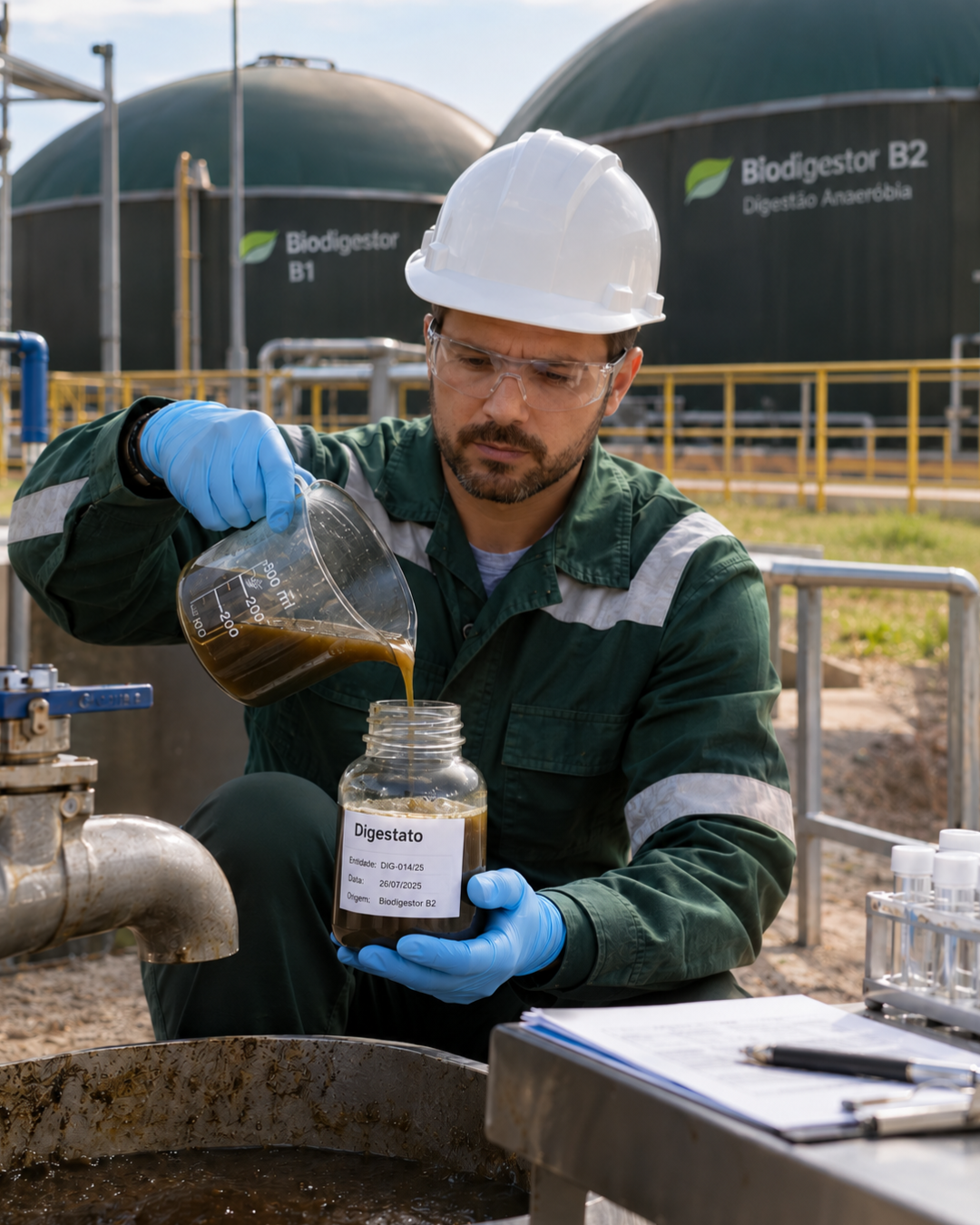
Quality begins with the incoming feedstock
Known origins and feedstock control
Feedstock selection influences digestate quality. The technical report Quality Management of Digestate, published by IEA Bioenergy Task 37, addresses physical impurities, chemical contaminants, and biological agents, emphasizing the importance of controlling incoming materials.
Anaerobic digestion should not be regarded as a process that eliminates every contaminant. Its effectiveness in reducing biological hazards depends on conditions such as temperature and retention time, and certain situations may require additional measures. Demonstrating safety requires an assessment of the process actually employed, rather than relying solely on the presence of an anaerobic digester.
Characterization and ongoing monitoring
A technical assessment may combine nutrient analysis and physicochemical characterization with testing for contaminants relevant to the material’s origin. The selection of parameters, analytical methods, and testing frequency should be determined by qualified professionals, taking into account the intended management pathway and applicable requirements.
From a management perspective, changing a supplier or introducing a new waste stream should trigger an additional question: will this change affect the characteristics of the outgoing material? Recording feedstock inputs, process changes, and analytical results helps provide an evidence-based answer. Quality must be monitored throughout operations, not demonstrated solely through a sample collected during plant commissioning.
Storage can preserve or diminish value
Removing digestate from the reactor does not necessarily bring biological activity to an end. In the key findings of its 2025 report, the IEA identifies enclosed digestate storage among the practices relevant to managing methane emissions from biogas and biomethane projects.
Nitrogen is another important consideration. Embrapa has documented losses of this nutrient during the storage and application of materials derived from anaerobic digester effluents. This directly connects handling practices with agronomic value: nutrients that are lost are no longer available for their intended use.
These findings indicate that storage requires its own technical specifications. Covers, containment systems, and potential gas collection arrangements should be evaluated as an integrated system, supported by appropriate engineering and operating procedures. The mere presence of a cover does not demonstrate effective emissions control or replace an operational safety assessment.
When planning a facility, storage capacity should be considered alongside the available periods for material removal and use. Digester operations and the recipient’s agricultural calendar may follow different schedules. Understanding this mismatch helps avoid sizing storage infrastructure based solely on the assumption that all material can be removed immediately.
Receiving farmland does not have unlimited capacity
Agricultural use must be based on crop nutrient requirements and site-specific conditions. An assessment limited to the digestate itself overlooks the land where it will be applied. Embrapa’s guidance on soil analysis reinforces the importance of sampling and land management history when interpreting soil fertility.
This helps explain why there is no universally applicable digestate application rate. Two digestates may have different compositions, just as two receiving sites may have different nutrient requirements. Planning must consider the relationship between the material, soil, crop, and other nutrient sources used on the farm.
Embrapa’s study on the application of cattle digestate to a Haplic Planosol in Seropédica illustrates the site-specific nature of such assessments: its findings are associated with defined experimental conditions. They do not justify extending the same recommendations to every soil type or agricultural production system.
For plant management, the practical implication is clear: the physical availability of land does not necessarily mean that its capacity to receive digestate has been demonstrated. Planning must identify suitable areas, responsible parties, and conditions of use. If a receiving site becomes unavailable, the operation should already have alternative arrangements in place before the situation develops into a logistical emergency.
Separation, treatment, and recovery: comparing the available pathways
Beneficial use may involve technically managed agricultural application, processing of individual fractions, or nutrient recovery. The choice depends on the material’s characteristics and intended destination. None of these alternatives should be presented as a universal solution for every plant.
The technical publication available through Embrapa on the fundamentals of anaerobic digestion, biogas purification, and digestate use and treatment discusses treatment processes and phosphorus recovery. It demonstrates that the selected process affects the properties of the recovered fraction and that removing a nutrient from an effluent does not, by itself, guarantee a product suitable for fertilization.
Solid-liquid separation must also be evaluated in terms of its overall outcome. Even after separation, material streams remain that require management. The project must identify how each fraction will be handled, which treatments will be necessary, and what volumes will remain under the operator’s responsibility.
When assessing an investment, it is important to compare management pathways based on total costs and the quality actually achieved. Processing equipment only makes sense as part of a broader solution that includes operation, maintenance, and a defined destination. Technological sophistication cannot substitute for compatibility with the available material and the market the project intends to serve.
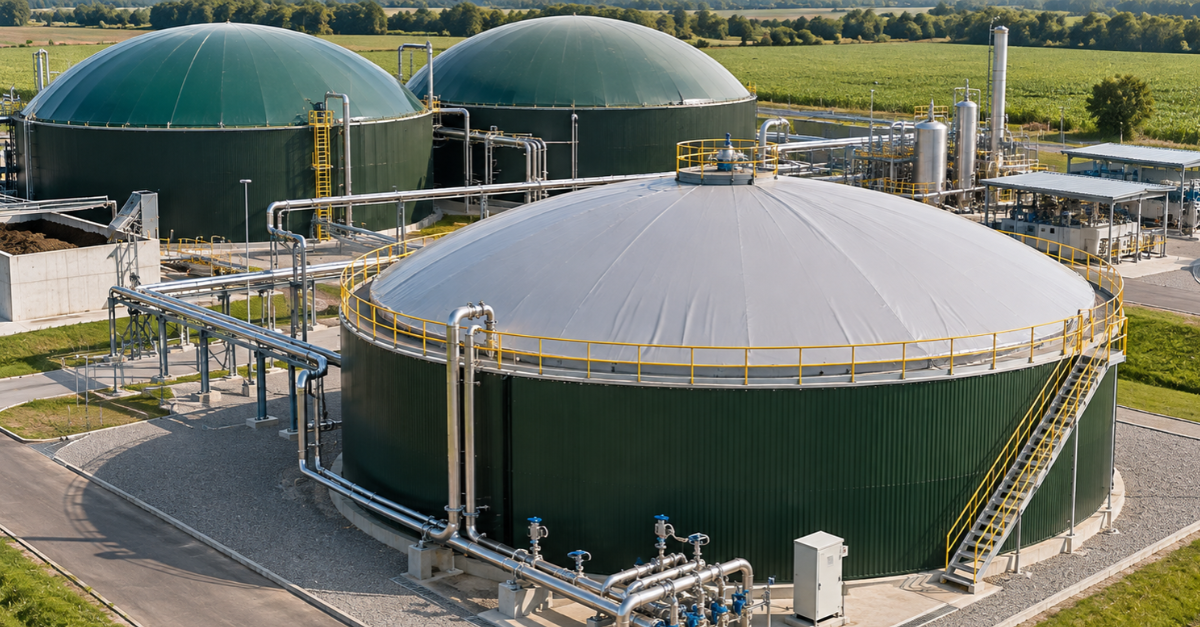
Logistics can determine project viability
Water content is an important variable in this discussion. Embrapa’s digestate initiative highlights the challenges of transporting highly diluted materials and proposes technologies for concentrating nutrients. Its objectives include reducing volume and making beneficial use more feasible across different locations.
The business challenge can be framed without establishing a universal distance threshold for economic viability: how much does it cost to deliver material of the required quality, at the right time, to a recipient capable of using it? The answer must account for loading, transportation, any necessary treatment, and receiving conditions.
As a planning exercise, at least three scenarios should be compared: a nearby destination with confirmed receiving capacity, a more distant destination, and the temporary unavailability of the primary recipient. These scenarios are not performance forecasts. They are ways of testing the operational model’s resilience to plausible changes.
It is also prudent to distinguish contracted revenue from potential value creation. Any study assigning a price to digestate must explain the quality of the material being sold, the intended buyer, and who will bear transportation costs. If these conditions have not yet been demonstrated, commercialization should remain an assumption in the financial analysis. This allows the project’s economic potential to be recognized without using it to obscure an existing material management obligation.
What changes when the goal is commercialization?
In Brazil, SDA Normative Instruction No. 61, dated July 8, 2020, establishes requirements for organic fertilizers and biofertilizers intended for agricultural use. Its scope includes definitions, specifications, guaranteed properties, registration, packaging, and labeling.
The legislation portal of Brazil’s Ministry of Agriculture and Livestock, consulted for this article, also lists Normative Instruction No. 27/2006, as amended by Normative Instruction No. 7/2016, concerning contaminant limits. These regulations provide references for assessing product classification; they do not constitute blanket authorization to market digestate.
In its guidance on product and establishment registration, Brazil’s Ministry of Agriculture and Livestock (MAPA) identifies relevant environmental documentation and contaminant testing reports among the requirements applicable to products made from waste-derived raw materials. Classification must take into account the material’s origin, processing, and intended purpose.
Using digestate on the property where it is produced and placing a product on the market should not be treated as identical situations. Likewise, product requirements and environmental obligations address different regulatory matters. Each project’s assessment must verify registration requirements, any applicable exemptions, environmental licensing, and state or local conditions, without assuming that compliance with one requirement satisfies all the others.
What investors and operators should be asking
A sound assessment can begin with straightforward questions, provided the answers can be verified. What is the expected composition of the digestate? How will it be monitored? Which destinations will be able to receive the material at different times of the year? Who is responsible for transportation and application? What happens when a batch fails to meet the requirements of its intended destination?
These questions help establish accountability. A supply agreement, for example, should clearly define the quality standards accepted by the recipient. An operating plan must specify how to respond to changes in material quality. A budget must allocate resources to the actual management pathway, including any treatment required before use.
Economic assessments should consider digestate alongside the plant’s revenues and expenses, maintaining a clear distinction between unavoidable costs and potential gains that still require validation. This approach reduces the risk of a project appearing more attractive simply because some of its obligations have been excluded from the calculations.
The same rigor applies to environmental communications. Stating that nutrient recycling is possible is different from demonstrating that it has actually taken place. Claims should be supported by evidence of the material’s actual destination, conditions of use, and the period covered by the information.
Circularity must extend all the way to the final destination
Biogas production creates a significant opportunity to recover value from organic waste. Digestate broadens that opportunity by connecting energy production, material management, and agriculture. However, this connection depends on decisions that must work beyond the simplified representation of a closed-loop system.
Known material quality, appropriate storage, agronomic assessment, logistics, and regulatory compliance are all interconnected parts of the same decision. When any one of these elements remains undefined, the potential for value creation remains just that: potential. When they are addressed together, the benefits can be assessed more clearly, and responsibilities can be assigned throughout the process.
The destination of digestate therefore deserves the same level of attention given to the plant’s other material streams. It must be addressed in feasibility studies, budgets, and day-to-day operations. A project can only fully answer the question “what happens to the waste?” when it can also explain what happens to the material left behind.
