

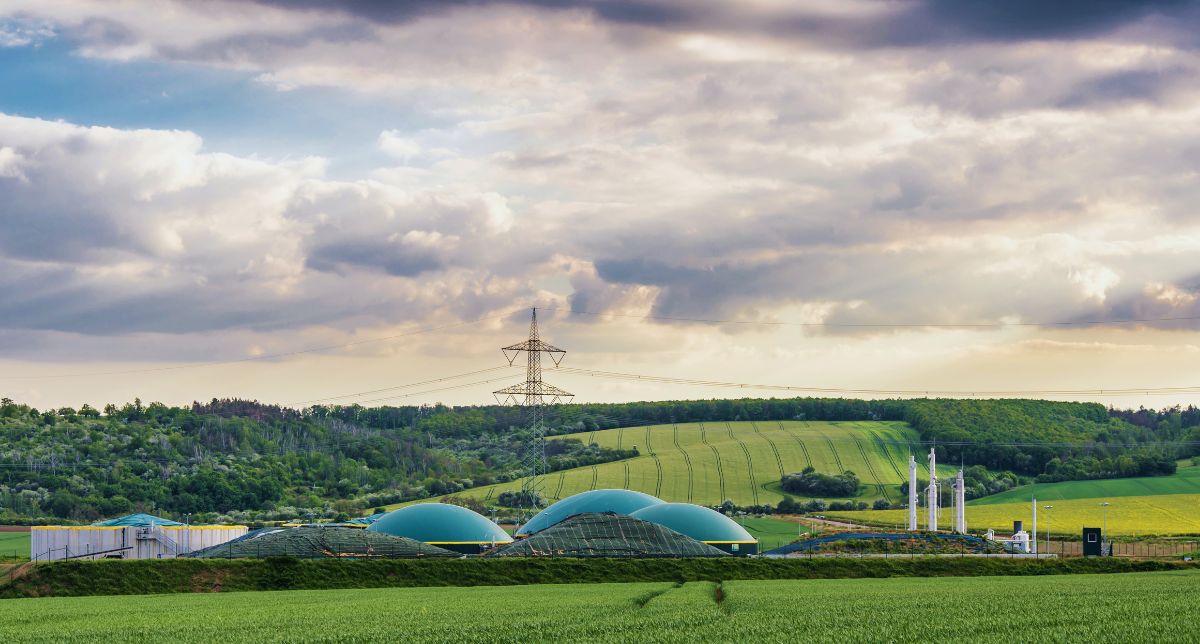
The decision creates a first regulated market for renewable gas, boosts agribusiness, and reinforces the decarbonization agenda, but experts disagree on the real scale of its impact on industry.
The National Energy Policy Council (CNPE) approved a 0.5% emissions reduction target for the natural gas market in 2026 through the use of biomethane. The decision was announced by the Ministry of Mines and Energy and reported by Agência Brasil, marking an important shift in how the country begins to integrate a renewable fuel into its gas sector decarbonization strategy.
In practice, the measure establishes a first regulatory step for a market that is still small but has strong growth potential in Brazil. The government says the 0.5% level was designed to balance technical feasibility, regulatory predictability, and market development incentives, especially at a time when biomethane supply remains limited.
At the same time, the decision has reignited a debate that was already taking shape within the sector: is the target enough to accelerate industrial decarbonization in Brazil, or is it still too small to produce a material impact in the short term? For some stakeholders, it represents a meaningful institutional advance. For others, the percentage falls short of what the country could achieve given its agroenergy potential and the urgency of climate action.
What the target changes
The target approved by the CNPE applies to natural gas producers and importers, who must reduce their greenhouse gas emissions by at least 0.5% in 2026 through the use of biomethane. The policy is tied to the Future Fuel framework, which already outlined a progressive regulatory approach for integrating renewable fuels into the gas market.
According to the Ministry of Mines and Energy, the chosen percentage considered the current balance between biomethane supply and demand, as well as the need to avoid imposing excessive costs on the sector at this early stage. The official rationale is that the country needs to start with an achievable target before expanding the scope of the policy.
Another important element of the decision was the creation of the Biomethane Market Monitoring Board within the Future Fuel Technical Committee. Its goal is to track supply, demand, and regulatory developments, with the possibility of reinstating the 1% minimum target set in law if the market matures sufficiently.
This detail is key to understanding the policy. The government’s approach is not one of permanent limitation, but of transition. The 0.5% target functions as a starting point, not necessarily the final destination.
Why the target divides experts
The divergence around the target stems from whether the number is viewed as a regulatory signal or as an effective volume of decarbonization.
Those who see the measure as progress highlight that, for the first time, biomethane gains a clearer pathway to enter the natural gas market at a regulated scale. This matters because the gas sector depends on predictability to contract, invest, and expand infrastructure. Without rules, there is no consolidated market. Without a market, there is no scale of supply. Without supply, the transition does not move forward.
Critics, however, argue that 0.5% is too small given the urgency of climate action and the potential of biomethane to replace a meaningful share of fossil gas, especially in industry. Because the renewable fuel has physical and chemical characteristics similar to fossil natural gas, it can be used in industrial, transport, and distributed generation applications without requiring major technological changes.
This is where the tension lies. Biomethane is already seen by many as a mature solution, but the adopted target still reflects an early stage market. For optimists, this is regulatory prudence. For critics, it signals a lack of ambition.
What the government argues
The government’s official position is clear: the 0.5% target was not designed as a symbolic gesture, but as a mechanism to build a market foundation.
According to the Ministry of Mines and Energy, the measure was designed to “stimulate investment and create the necessary conditions for the development of biomethane as a decarbonization vector, without compromising energy security and industrial competitiveness.” In other words, the idea is not to push the system before the supply chain is ready to respond.
There is an economic logic behind this decision. Biomethane depends on available feedstock, purification plants, certification, contracts, and a distribution network capable of absorbing the product. Although Brazil has strong potential supply, actual production remains limited. Agência Brasil reported that there are 19 authorized biomethane plants and another 37 in the authorization process.
This helps explain why the government prefers a lower initial target. When supply is constrained, an overly aggressive regulatory obligation can create price pressure, supply insecurity, and legal disputes. The sector needs time to structure itself.
Why agribusiness benefits from the measure
If there is one segment that views the target especially positively, it is agribusiness.
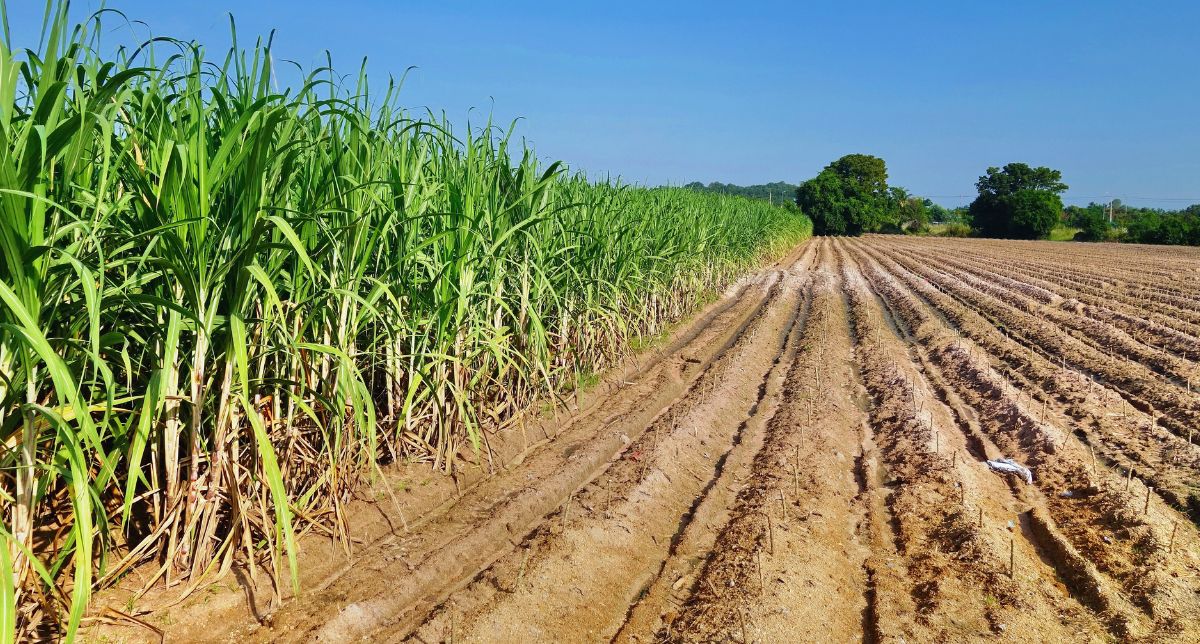
This is because biomethane is largely produced from agroindustrial waste, livestock manure, effluents, and organic byproducts. Instead of representing only a disposal cost, this material gains economic and energy value. This is highly relevant for supply chains such as pork, beef, poultry, sugarcane, food processing, and rural sanitation.
The CNPE decision creates additional demand for these residues, which can strengthen projects already working with biodigestion and biogas generation. The economic effect is direct: greater predictability for selling renewable gas, more opportunities to monetize waste, and stronger incentives for farms and agroindustries to invest in capture and purification infrastructure.
There is also a reputational and market strategy gain. At a time when supply chains are under pressure for traceability, emissions, and ESG targets, biomethane helps position agribusiness not only as a food producer but also as a player in the energy transition. This is particularly relevant in regions with high concentrations of organic waste and favorable logistics.
In many sector discussions, biomethane is seen as the link between rural productivity, circular economy, and decarbonization. It is not only an energy issue, but also a regional development agenda.
Where the limitations lie
Despite the enthusiasm, the 0.5% target has clear limitations.
The first is supply size. The government itself acknowledges that the percentage reflects current market conditions and its ability to meet the requirement without disruption. This means that, at present, fuel availability is still insufficient to support higher targets with confidence.
The second limitation is industrial scale. For biomethane to have a strong impact on industrial decarbonization, it needs to enter medium and long term contracts consistently. This requires production predictability, pipeline integration, certification of origin, and competitive pricing. Without these elements, the impact remains concentrated in isolated projects.
The third limitation is climate impact. While biomethane is a much cleaner alternative than fossil gas, a 0.5% substitution represents a small step within a complex energy and industrial system. From a public communication standpoint, the measure is relevant because it introduces a mechanism. From an emissions standpoint, it does not yet significantly alter the sector’s profile.
This is why some experts approach the decision with caution. They recognize the institutional progress but call for a more ambitious expansion path after 2026.
What could happen after 2026
One of the most important aspects of the decision is that the regulatory design itself suggests evolution. The 0.5% target was presented as an initial step, while the law allows for reinstating the 1% minimum in the future if the market develops consistently.
In practice, this opens the door for a progressive growth curve. The sector expects the target to increase in the coming years as new plants come online, contracts are established, and the supply chain matures. In this sense, 2026 is less a finish line and more a test of how the model works.
This trajectory matters for a simple reason. Energy transition policies often fail when they try to demand a market before creating one. The CNPE decision appears to follow the opposite logic: first establish a small, measurable, and feasible baseline, then assess how the supply chain responds.
If monitoring shows growth in production and availability, the government will have a basis to raise the target. If supply remains constrained, the policy may remain at the minimum level. The success of the measure therefore depends less on the number itself and more on how quickly the biomethane chain expands.

The impact on industry
From an industrial perspective, the target has two simultaneous effects.
The first is positive: it creates a regulatory reference for a renewable fuel that can replace part of the fossil gas used in industry, reducing emissions and, in some cases, helping companies meet climate targets and ESG commitments. Biomethane can also strengthen energy security strategies, especially in gas intensive sectors.
The second effect is one of expectation. In many cases, industry wants more than a signal. It wants physical supply, competitive pricing, and contractual stability. For this reason, simply approving a target does not eliminate doubts about scale, logistics, and cost. The measure opens the door, but does not yet guarantee the transition.
This duality explains why the debate has intensified. Industry sees opportunity, but conditions adoption on market maturity. The government itself appears to recognize this reality by choosing a more modest target in the first year.
What critical experts say
The more critical experts argue that the percentage falls below what would be expected from a policy aimed at driving large scale decarbonization.
For this group, the decision may be institutionally positive but climatically insufficient. Their reasoning is that biomethane could play a more significant role if the government had adopted a stronger expansion trajectory from the outset, especially in a country with a strong agroindustrial base and high potential for organic waste generation.
They also point out that small targets, while easing initial implementation, may reduce pressure for rapid expansion. If the market becomes accustomed to a low requirement, the policy risks losing momentum. For this reason, many argue that the monitoring board should have clear review benchmarks to avoid stagnation.
This is not a trivial debate. It touches the core of any transition policy: how to balance ambition and feasibility. If regulators demand too much, the market stalls. If they demand too little, transformation does not happen.
What biomethane advocates say
On the other hand, supporters of the measure argue that the 0.5% figure should not be viewed in isolation. It needs to be understood as the first step in building a market that had been calling for a clear signal.
Biomethane has concrete advantages. It reduces emissions, uses waste, generates value for agribusiness, can replace fossil fuels without major changes to existing infrastructure, and helps diversify the energy mix. For this group, the priority now is to establish a reliable regulatory foundation so the sector can grow with stability.
There is also a political dimension. Brazil has a history of discontinuity in energy policies. When the government sets a target, even a small one, it reduces uncertainty and improves conditions for investment. In capital intensive sectors, this is critical.
In addition, biomethane connects with other strategic agendas. It helps address waste management challenges, can contribute to sanitation, reinforces the circular economy narrative, and links clean energy with rural production. This is why support for the sector extends beyond the gas market and across entire value chains.
Biomethane as part of the energy transition
The CNPE decision confirms that biomethane has definitively entered the conversation on energy transition in Brazil.
This matters because the country often focuses the debate on solar, wind, and green hydrogen, while biomethane appears as a less visible but more immediate solution in certain applications. Because it is compatible with natural gas infrastructure, it can help decarbonize sectors that are difficult to electrify, such as parts of industry and heavy transport.
This may be the greatest value of the measure. It does not solve everything, but it broadens the transition toolkit. Instead of focusing only on new electricity generation sources, Brazil begins to consider a renewable fuel that can replace a fossil fuel already embedded in the economy.
The 0.5% target is still small to change the country’s emissions curve on its own. But it changes how the problem is framed. Biomethane moves from being a technological promise to becoming a regulated component of energy policy.
What to watch going forward
In the coming months, three points will be key to watch.
The first is the performance of the Biomethane Market Monitoring Board, which will indicate whether supply is actually responding to the new rule. The second is the evolution of plant authorizations, currently at 19 approved units and 37 under review according to the government. The third is the response from industry and agribusiness, which may accelerate or slow market expansion depending on product competitiveness.
If the market responds well, the trend is toward an upward revision of the target after 2026. If supply remains constrained, the government may maintain a more conservative pace. In any scenario, the current decision has already produced a relevant effect: it has placed biomethane at the center of the natural gas regulatory debate.
And for a sector that for a long time remained on the margins of energy policy, that alone is already a significant shift.

Comment