


Global Coalition for Energy Planning, led by IRENA, turns national strategies into bankable projects paving the way for annual investments of US$ 670 billion in power grids through 2030.
The global energy transition faces a paradox. While installed renewable energy capacity is growing rapidly, the infrastructure that should move that energy from generation sites to end consumers remains outdated undercutting progress toward global climate goals. In January 2026, during the 16th Assembly of the International Renewable Energy Agency (IRENA) in Abu Dhabi, global leaders launched the operational phase of an initiative that promises to change this landscape: the Global Coalition for Energy Planning (GCEP).
The central message is clear: without robust, transparent energy planning, there is no investment at scale. And without massive investment in power grids, the goal of tripling renewable capacity by 2030 set at COP28 in Dubai will remain only on paper.
The Power Grid Infrastructure Bottleneck
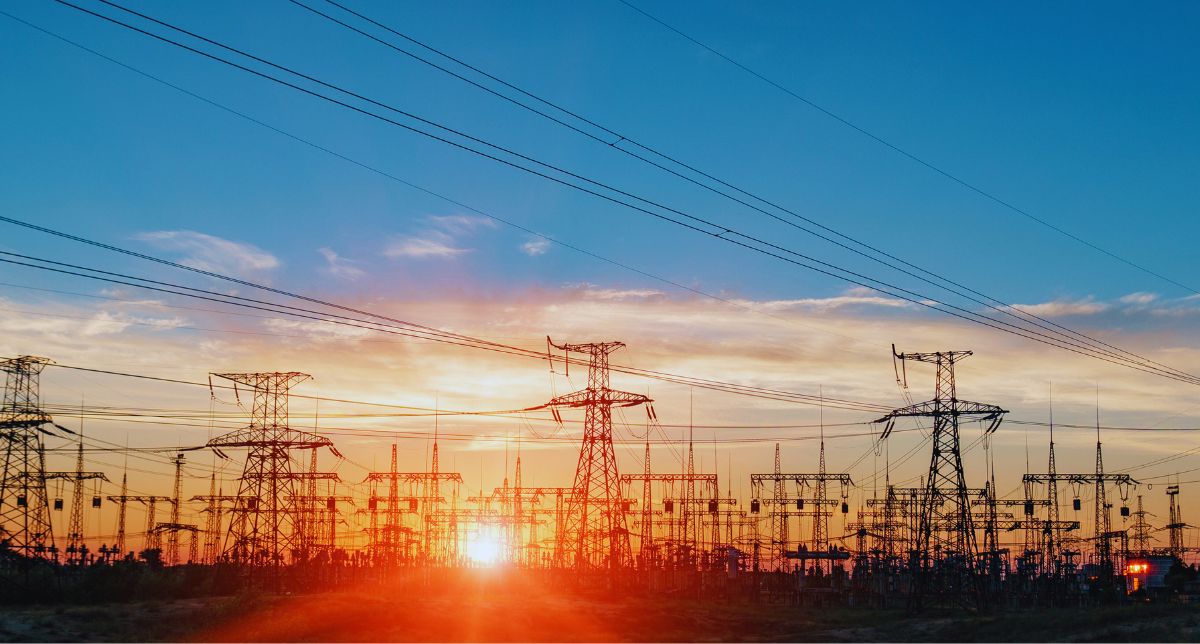
The numbers illustrate the challenge. According to IRENA estimates, US$ 670 billion per year will be needed between 2025 and 2030 just to strengthen and modernize global power grids. This figure is not a luxury or an inflated ambition it is the minimum required to make the energy transition underway feasible.
Power grids that carry electricity from production sites to consumption points face a dangerous combination of factors: rapidly rising demand, growing complexity, obsolete equipment, and an urgent need for expansion. Much of today’s infrastructure was designed decades ago for centralized, fossil-fuel-based systems and is not prepared to integrate the distributed and variable generation typical of renewables.
During the January 2026 Assembly, Francesco La Camera, IRENA’s Director-General, was direct: “By investing more, we will send a powerful signal to markets: grids are the backbone of the energy transition and the key to reaching our goal of tripling installed renewable capacity by 2030, as set out in the UAE Consensus at COP28.”
From Strategy to Investment: The Role of Planning
The biggest obstacle is not a lack of global financial resources, but the absence of well-structured, bankable projects with mitigated risks that can attract private capital at scale. This is exactly where energy planning becomes decisive.
Mike Enskat, Director of IRENA’s Innovation and Technology Center, reinforced this during a high-level roundtable at the January 2026 event: “Mobilizing finance to expand and modernize grid infrastructure requires addressing challenges related to financing gaps and capital risks. Energy planning must be the tool to close those gaps, attracting investment where it is needed.”
Yuval Laster, Head of the Environment Division at the OECD, added during the same event, highlighting what policymakers need to do to attract investment: “Investment planning must be anchored in clear energy planning; a regulatory framework that creates an enabling investment environment; risk-mitigation mechanisms; and a pipeline of bankable projects. Combined, these must be aligned to mobilize finance for power grids.”
The Global Coalition for Energy Planning Goes Operational
Officially launched during the 1st Energy Planning Meeting in June 2025 in Rio de Janeiro, the GCEP entered its operational phase in January 2026. The initiative emerged from Brazil’s G20 presidency in 2024 and has IRENA as its permanent secretariat.
The coalition works around five core principles: promoting transparent and effective energy planning; facilitating knowledge exchange and capacity development; catalyzing investment by creating enabling environments; encouraging national ownership of energy-planning processes with inclusive participation; and leveraging existing initiatives and partnerships.
Juan Jose Garcia Mendez, an IRENA Programme Officer, presented at the January 2026 Assembly the GCEP’s two central workstreams: building a bridge between energy ministries and financial institutions by improving planning governance, and strengthening technical capacity for implementation.
The strategy is pragmatic. Rather than creating yet another layer of international bureaucracy, the GCEP operates as a cooperation platform connecting countries with proven energy-planning expertise to those still building capacity, especially in the Global South.
Numbers That Impress and Raise Concern
Global investment in energy-transition technologies reached a record US$ 2.4 trillion in 2024, according to the report “Global Landscape of Energy Transition Finance 2025” released by IRENA in November 2025. Although annual investments have more than doubled since 2019, they remain concentrated in advanced economies and China, leaving most emerging and developing countries behind.
About one-third of investment in 2024 went to renewable energy technologies, bringing renewable investment to US$ 807 billion. Global investment in solar PV hit a record US$ 554 billion in 2024, a 49% increase. For the first time, investment in renewables, grids, and battery storage surpassed investment in fossil fuels in 2024 although fossil-fuel spending is rising.
But there is a structural problem. Francesco La Camera highlighted: “IRENA has long advocated for smarter use of public funds to unlock private investment through risk-mitigation tools. However, the strong reliance on profit-driven capital is leaving developing countries behind.”
Nearly half of total investment in 2023 was provided as debt, mostly at market rates. The rest was invested through equity. Grants accounted for less than 1%. The urgent need to mobilize investment, combined with the scarcity of impact-oriented capital such as concessional debt and grants risks exacerbating debt burdens in the most vulnerable countries.
Private Sector Commits to US$ 117 Billion per Year
Alongside government initiatives, the private sector has shown concrete signs of commitment. More than 70 members and partners of the Utilities for Net Zero Alliance (UNEZA) reaffirmed their commitment to annual investments of over US$ 117 billion in grids and renewables.
Around 48% of planned and committed investment will be directed to grid infrastructure, supporting the ambitions outlined by COP29’s Global Energy Storage and Grids Pledge to add or refurbish 80 million kilometers of grids by 2040.
In September 2025, during New York Climate Week, UNEZA launched the report “Delivering Large-Scale Grid Infrastructure Projects at Pace” (Delivering Large-Scale Grid Infrastructure Projects at Speed). The document confirms that delivering large-scale grid infrastructure projects while complex and time-consuming is feasible with significant financial investment, extensive planning, and coordination among multiple stakeholders.
The alliance identified four key areas of lessons learned for delivering large-scale infrastructure projects: planning, financing, supply chains, and skills. Recommendations from UNEZA members are grouped under these four areas, based on concrete examples of projects implemented in different parts of the world.
Systemic Innovation: 40 Solutions to Transform Energy Systems
During the January 2026 Assembly, IRENA launched the report “Innovation Landscape for Sustainable Development Powered by Renewables,” which identifies 40 innovations capable of transforming global energy systems.
The report was presented during a Ministerial Dialogue on the role of Artificial Intelligence (AI) and makes clear that transformation happens when technological innovation is intertwined with innovation in policy, regulation, market design, system operations, and business models.
The 40 innovations range from AI and digital applications to solutions for modernizing grids through smarter planning, off-grid solutions, and new business models. The report concludes that only a systemic, integrated approach can deliver resilient energy systems, expand access to energy, ensure affordability, and fulfill the full promise of the energy transition.
To make the 40 identified innovations actionable and immediately applicable for policymakers, they are grouped into four strategic toolkits for context-specific solutions: grid modernization, decentralized solutions, inclusive local development, and energy access.
Real-World Examples: From Theory to Reality
The report presents concrete examples of innovations already being tested globally. In Tanzania, Kenya, Colombia, and Malaysia, residents of energy communities collectively own and benefit from local renewable projects. Regional power pools in West Africa enable 15 countries to share renewable resources across borders.
Dynamic line rating in Malaysia increases transmission capacity by 10–50% through real-time climate monitoring. Battery swapping stations in Uganda and Rwanda make electric mobility more accessible. And prepaid business models have brought affordable electricity to more than 500,000 people in Sierra Leone and Liberia.
Francesco La Camera emphasized at the report’s launch: “The energy transition is not only about technology availability, but also about solutions that deliver social justice and avoid leaving anyone behind. With today’s report, we call for a systemic innovation approach and provide policymakers with a toolkit to craft tailored solutions.”
Latin America in the Investment Spotlight
In February 2026, IRENA opened a call for renewable energy projects in Latin America, inviting project developers from the region’s public and private sectors to submit proposals. Selected projects may be considered for financing through IRENA’s Climate Investment Platform (CIP) and the Energy Transition Accelerator Financing (ETAF) platform.
The initiative aims to support Latin American countries’ ongoing efforts to decarbonize their economies and expand renewable energy use, ensuring a just energy transition. Eligible projects will benefit from potential access to financing, investment partnerships, and risk-mitigation instruments to help accelerate their development.
The ETAF platform provides access to medium-to-large renewable energy projects that are investment-ready, with a range of financing instruments totaling US$ 4 billion committed by its 14 global finance and risk-mitigation partners. Capital expenditure requirements are at least US$ 25 million for private projects or Public-Private Partnerships (PPPs) and US$ 10 million for public-sector projects.
Eligible projects include those from Argentina, Belize, Bolivia, Brazil, Chile, Colombia, Costa Rica, Cuba, the Dominican Republic, Ecuador, El Salvador, Guatemala, Honduras, Mexico, Nicaragua, Panama, Paraguay, Peru, Suriname, Uruguay, and Venezuela.
Brazil as a Model for Long-Term Planning
Brazil has emerged as an example of how long-term energy planning can attract the investment needed for the energy transition. Alexandre Silveira de Oliveira, Brazil’s Minister of Mines and Energy, formalized the invitation for IRENA to serve as the GCEP Secretariat during a side event in January 2025, stating: “There are many international commitments on the energy transition, but we need ways to implement them. I am confident that the GCEP, with IRENA as Secretariat, can be one of the best tools to address this.”
Rasmus Tengvad, Head of Division at the Danish Energy Agency, shared during the 2026 Assembly how long-term planning attracted the investment needed for Denmark’s energy transition offering valuable lessons for other countries.
The Director of Financial Solutions for Energy, Policy and Regulation at the African Development Bank (AfDB) reiterated that energy planning is a multi-stakeholder exercise, highlighting local-currency issues: “We must use local currency, ensure that the framework supports the use of local currency in financing these projects, especially cross-border ones. We have to account for foreign-exchange risk mitigation to ensure that investment truly translates into concrete projects.”
The Road to 2030
With COP31 scheduled for November 2026 in Antalya, Turkey, and expectations that COP32 will take place in 2027, pressure on governments and companies to present concrete plans to modernize power infrastructure only continues to grow.
The GCEP represents a paradigm shift: rather than focusing only on renewable installed-capacity targets, it recognizes that transmission and distribution infrastructure is just as critical as generation. Instead of creating new financing mechanisms from scratch, it works to make existing projects more attractive to available capital through better planning and risk mitigation.
The challenge is enormous: US$ 670 billion annually through 2030 for power grids alone. But for the first time, there is robust global coordination connecting planners, financiers, governments, and the private sector around a common agenda.
As Francesco La Camera noted during the January 2026 Assembly: “IRENA, as Secretariat of the GCEP, will leverage its near-universal membership and extensive repository of best practices for renewable energy planning and modeling to support countries particularly in the Global South in developing energy strategies aligned with national development and climate goals.”
The Decisive Factor: International Cooperation
What sets the GCEP apart from previous initiatives is the explicit recognition that the energy transition cannot be achieved by countries individually—especially developing ones. North–South, South–South, and even South–North cooperation is essential.
The Global Network of Long-Term Energy Scenarios (LTES), which underpins the GCEP, has already demonstrated the value of collaboration among national energy-planning institutions across different regions and development contexts. It promotes inclusive partnerships and collective wisdom, bringing together energy-planning champions to share experiences and solutions.
Gauri Singh, IRENA’s Deputy Director-General, emphasized during the IRENA Legislators Forum in January 2026: “This is not only about reaffirming ambition, but about rethinking how enabling structures will come together to deliver on that ambition.” She underscored that it is not only about technology and innovation, but about people—and ensuring everyone benefits.
Conclusion: Planning as Investment
The message emerging from IRENA’s 16th Assembly and the operational launch of the GCEP is crystal clear: energy planning is not a bureaucratic cost, but a strategic investment. Every dollar spent on robust planning can unlock tens of dollars in private investment by reducing perceived risks and increasing investor confidence.
The global energy transition is at an inflection point. The technology exists, global financial resources exist, and political will—at least in statements—also exists. What was missing was the bridge between these elements. Structured, transparent, internationally coordinated energy planning can be exactly that bridge.
The next four years, through 2030, will determine whether the world can turn commitments into concrete outcomes, strategies into bankable projects, and ambitions into real infrastructure. The Global Coalition for Energy Planning, with IRENA at the forefront, offers the roadmap. Now it’s time to deliver.

Comment