

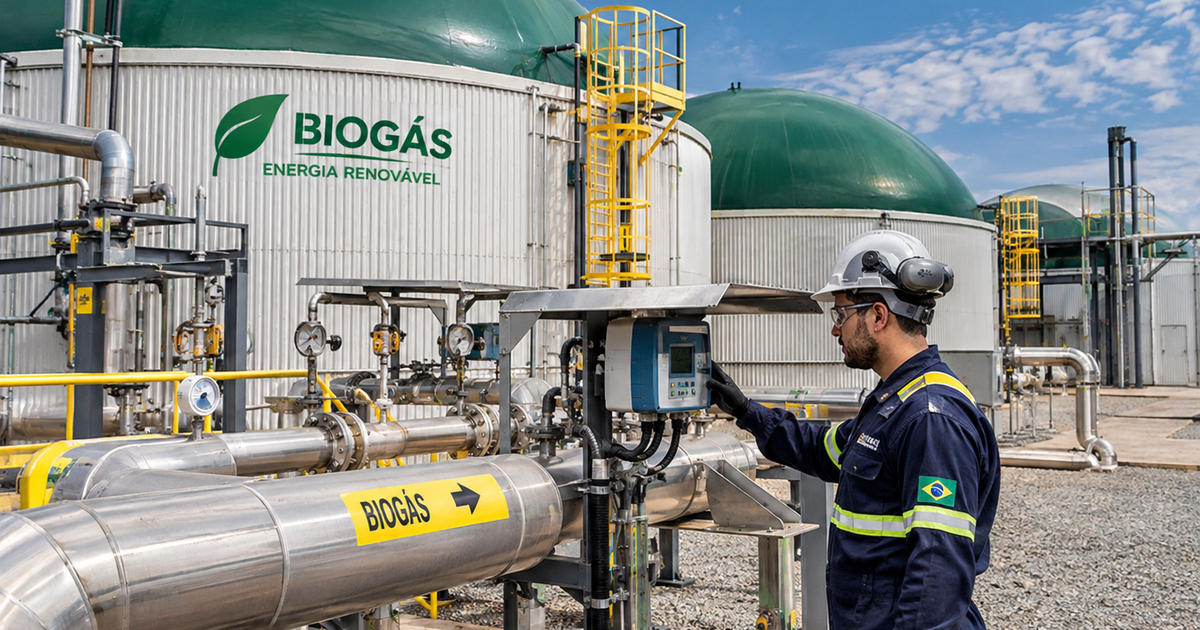
Brazilian biomethane has just gained a key element needed to establish a fully functioning market: a document that verifies its origin. On November 6, 2026, Brazil’s National Agency of Petroleum, Natural Gas and Biofuels (ANP) approved the first three producers authorized to issue the Biomethane Guarantee of Origin Certificate (CGOB). The facilities are located in the states of Rio Grande do Sul and São Paulo. The announcement, covered by regional media outlets, marks the practical implementation of an instrument that had already been established by law and regulated but had yet to be put into use.
For companies developing, financing, or operating biogas plants, the CGOB is far more than an administrative requirement. It changes the economics of project development. From now on, every cubic meter of biomethane injected into the grid or sold can carry a traceable environmental attribute with its own economic value, which can be traded independently of the physical gas molecule. In this article, we explain what the certificate is, how it works, which producers have already been authorized, why it matters for the development of new facilities, and what challenges remain.
What Is the CGOB, in Simple Terms?
The CGOB is a traceability instrument. It verifies that a specific volume of biomethane was produced from a renewable source at a particular facility within a defined period. In practice, it serves as a birth certificate for renewable gas.
The underlying principle is similar to that of other environmental attribute markets already established in the energy sector. Once purified, biomethane is chemically very similar to fossil natural gas. When injected into a gas pipeline, it blends with fossil-derived gas and becomes physically indistinguishable. The certificate addresses this issue by separating the renewable attribute from the gas molecule, allowing that attribute to be purchased, sold, and accounted for by organizations seeking to demonstrate their use of renewable gas.
According to energy news outlet eixos, the ANP published its regulations governing the certificate in February 2026. The November announcement marked the next step: the approval of the first facilities eligible to issue certificates.
Who Are the First Authorized Producers?
The first three certifications approved by the ANP were granted to:
- Central de Tratamento Integrado Resíduo Zero, in Triunfo, Rio Grande do Sul;
- Biometano Verde Paulínia, in Paulínia, São Paulo;
- CRI Geo Biogás, in Elias Fausto, São Paulo.
Two key insights emerge from this list. First, the pioneering projects are associated with waste: solid waste treatment, landfills, and agro-industrial supply chains. These are precisely the types of feedstock that currently go to waste in large quantities across Brazil and could instead be converted into energy. Second, there is a geographical dimension: no producers from Brazil’s Northeast, Central-West, or North regions are among the first authorized companies. This highlights how the country’s biomethane industry remains concentrated in the South and Southeast, despite the enormous agricultural and livestock potential of other regions.
One important provision is that ANP Resolution No. 996/2026 allows producers whose certification is approved in 2026 to issue certificates for biomethane sold as far back as January of that year. In other words, producers authorized before the end of the year can retroactively monetize their entire annual production. For facilities already in operation, this provides a clear incentive to accelerate the certification process.
Why a Certificate Can Transform the Financial Viability of a Plant
Biogas project developers understand that a facility’s financial viability depends on multiple revenue streams. Until now, the main sources of revenue have included:
- Sales of biomethane or biogas as fuel for industrial applications, transportation, or injection into the gas grid;
- Electricity sales, when biogas is used to fuel engine-driven generators;
- Waste acceptance fees (gate fees), when the facility processes waste from third parties;
- Sales of co-products, such as digestate used as biofertilizer and, in some cases, CO₂ recovered during the gas purification process.
The CGOB introduces an additional revenue stream: income from environmental attributes. This revenue has a particularly valuable characteristic, as it does not depend on where the physical gas molecule is consumed. A facility in the interior of São Paulo state can sell its gas to a local customer while simultaneously selling certificates to a company seeking to demonstrate its use of renewable gas in another state or even another country.
This expands the potential pool of buyers and can make cash flows more predictable. For banks and investors, predictability is essential. Projects with diversified revenue streams and long-term certificate purchase agreements become easier to finance.
The Connection Between the Fuel of the Future Law and Natural Gas Decarbonization Targets
The CGOB was not created in isolation. It is a central component of Brazil’s national biomethane program, established under the Fuel of the Future Law, which introduced a new obligation for the natural gas market. As explained in a NeoFeed report, starting in 2026, natural gas producers and importers are required to demonstrate annually that they have purchased or consumed a minimum volume of biomethane proportional to the amount of fossil gas they sell. The initial target is 1%, with annual percentages determined by Brazil’s National Energy Policy Council (CNPE).
This is where the certificate becomes particularly significant. Without a reliable traceability instrument, verifying whether each market participant had fulfilled its obligations would be extremely difficult. With the CGOB, compliance can be demonstrated through the acquisition and retirement of certificates. In other words, the certificate serves as the currency for regulatory compliance.
The ANP’s technical note on the CGOB describes the program as a policy designed to encourage research, production, commercialization, and the use of biomethane and biogas within Brazil’s energy mix. A transitional rule applies in 2026: the target is calculated on a pro rata basis starting from the date the first certificate is issued. Going forward, annual targets must be established by November 1 of each year.
The practical outcome is the creation of regulatory-driven demand. Unlike a voluntary market, where purchases depend on companies’ willingness to pursue environmental targets, the legal obligation ensures that there will be buyers. For plant developers, this helps mitigate one of the industry’s greatest business risks: the lack of buyers.
The First International Agreement Has Already Been Signed
A sign that the market is developing rapidly emerged even before the first round of producer authorizations. According to eixos, Bioo signed the first CGOB sales agreement with a European buyer. The transaction demonstrates that Brazilian certificates may attract interest from international companies, particularly in markets with more stringent climate targets.
This development aligns closely with ongoing international discussions. At COP31 in Antalya, Türkiye, the Brazilian Biogas and Biomethane Association (ABiogás) advocated for countries to establish mechanisms for the mutual recognition of certificates. If these efforts move forward, a CGOB issued in Brazil could be accepted under verification frameworks in other countries, further enhancing the value of domestic production.
How Much Room Does Brazil Have for Growth?
The scale of the opportunity explains why the certificate is so important. ABiogás estimates that Brazil could produce approximately 120 million cubic meters of biomethane per day if its full technical potential were realized. According to NeoFeed, this volume would be equivalent to 62% of the country’s diesel consumption.
The current reality remains far from that potential. In September 2026, ABiogás President Josiani Napolitano presented data indicating that authorized biomethane production facilities represent only 2% of Brazil’s potential, as reported by BrasilAgro. At the same time, production has been growing rapidly: data released ahead of the 13th Biogas Forum indicated a 75% increase in biomethane production.
The association also projects BRL 216 billion in biogas and biomethane investments by 2035, according to Canal Rural. This level of investment will only materialize if regulatory certainty and predictable revenue streams are in place. The CGOB is one of the mechanisms that can help deliver that predictability.
What Producers Need to Issue Certificates
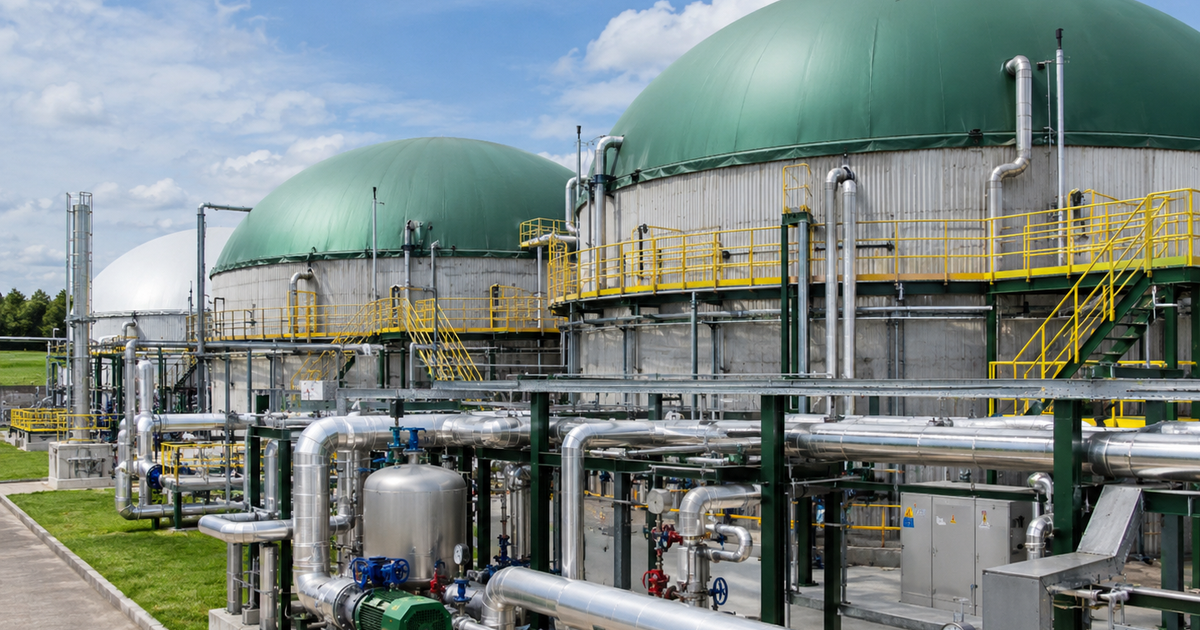
Although each certification process involves specific technical requirements established by the ANP, there are several elements that every project should consider from the development stage to ensure eligibility:
- Reliable and auditable measurement of the volume produced and sold, supported by continuous monitoring systems;
- Feedstock traceability, including documentation verifying the origin of the waste supplied to the anaerobic digester or landfill;
- Gas quality control in accordance with ANP biomethane specifications, including the latest requirements for microorganism retention filters at biogas upgrading facilities, as outlined in the updated commercialization regulations;
- Valid operating authorization from the ANP;
- Data governance, since the certificate only holds value if the information supporting it is reliable and trusted by buyers and auditors.
For new projects, the recommendation is to incorporate these requirements into the facility’s design from the outset. Retrofitting an existing plant to meet measurement and traceability requirements is generally more expensive than integrating them into the detailed engineering design.
The Challenges That Still Lie Ahead
Like any emerging market, the biomethane certificate market still faces several unresolved challenges. The main ones include:
- Price discovery: With a limited number of issuers and buyers, there is not yet an established pricing benchmark. Prices are expected to become more transparent as regulatory targets become mandatory and trading volumes increase.
- Regional concentration: The first authorized producers are located in the South and Southeast. Regions with significant agricultural and livestock potential, such as the Central-West and Northeast, still require additional projects and infrastructure.
- Gas transportation infrastructure: Many projects are located far from existing gas pipeline networks, requiring alternative solutions such as compressed or liquefied gas transportation or local consumption.
- International recognition: Without agreements between countries, Brazilian certificates may face challenges in gaining acceptance under foreign verification frameworks.
- Regulatory uncertainty: Industry representatives have highlighted at events and in interviews that frequent regulatory changes delay investment decisions. A recent discussion hosted by GRI identified this issue as a barrier to industry expansion.
What the CGOB Means for Businesses That Generate Waste
Perhaps the certificate’s most transformative impact lies outside the energy sector itself. Landfills, meat processing facilities, dairy plants, sugar and bioenergy mills, pig and poultry farms, wastewater treatment plants, and food manufacturers generate large volumes of organic waste every day. For many of these businesses, waste is still viewed as a cost that must be managed through treatment, transportation, and disposal.
With a functioning certificate market, that same waste can become an asset. A well-structured biogas project can transform an environmental obligation into a source of revenue through the sale of gas, electricity, biofertilizers, or, now, certified renewable attributes.
This shift in perspective is precisely what GNPW has been advocating by treating waste as the starting point for an energy opportunity. Each source of organic matter has its own location, scale, and characteristics. Understanding these factors is essential to determining whether the best solution is electricity generation, biomethane production, or a combination of both pathways.
How to Determine Whether a Biogas Project Can Benefit
For companies considering converting waste into energy, several questions can help guide an initial assessment:
- What is the volume and consistency of the available feedstock? Biogas projects depend on a steady supply of waste throughout the year.
- What is the methane production potential of this waste? Different substrates can have significantly different methane yields.
- Is there a gas pipeline or gas consumer nearby? Logistics determine whether grid injection, on-site consumption, or transportation is the most suitable option.
- Is there local demand for electricity and heat? In some cases, combined heat and power generation may be more advantageous than upgrading biogas to biomethane.
- Can the project meet measurement and traceability requirements? The answer determines whether certificate sales can become an additional revenue stream.
Answering these questions requires technical, engineering, economic, and financial feasibility studies. The certificate cannot rescue a poorly designed project, but it can make financially viable a project that was previously on the margins of feasibility.
Conclusion: Biomethane Now Has a Passport
The approval of the first facilities authorized to issue CGOBs is one of those milestones that may appear purely technical but can transform the dynamics of an entire industry. The certificate turns biomethane’s renewable attribute into a tradable asset, connects domestic production to the legal obligation to decarbonize natural gas, and paves the way for Brazil to export not only gas molecules but also verified proof of origin.
For companies developing and implementing biogas plants, the message is clear: traceability is now an integral part of the business model. Projects designed from the outset to measure, document, and certify their production will gain access to a revenue stream that, until recently, simply did not exist.
The next chapter will depend on the annual targets established by the CNPE, the development of pricing benchmarks, and progress toward international recognition agreements. But the first and most challenging step has already been taken. Brazilian biomethane now has a passport, and it could take the industry a very long way.
For more insights into biogas, biomethane, and waste-to-energy solutions, visit the GNPW blog.
