

The story of 2025 will be told through two numbers that don’t match. On one side, Brazil consolidated 62 gigawatts of installed solar capacity, reached 215.6 gigawatts of total power in its electricity mix with 84.45% from renewable sources, and positioned itself as an undisputed leader in the global energy transition. On the other side, atmospheric carbon dioxide concentration reached 425.4 parts per million in December, the highest level recorded in 800,000 years, and the global average temperature is edging dangerously close to 1.5 degrees Celsius above pre-industrial levels.
This is the paradox of 2025. A year of energy records alongside a climate crisis that refuses to slow down.
The Renewable Expansion: A Success With Limits
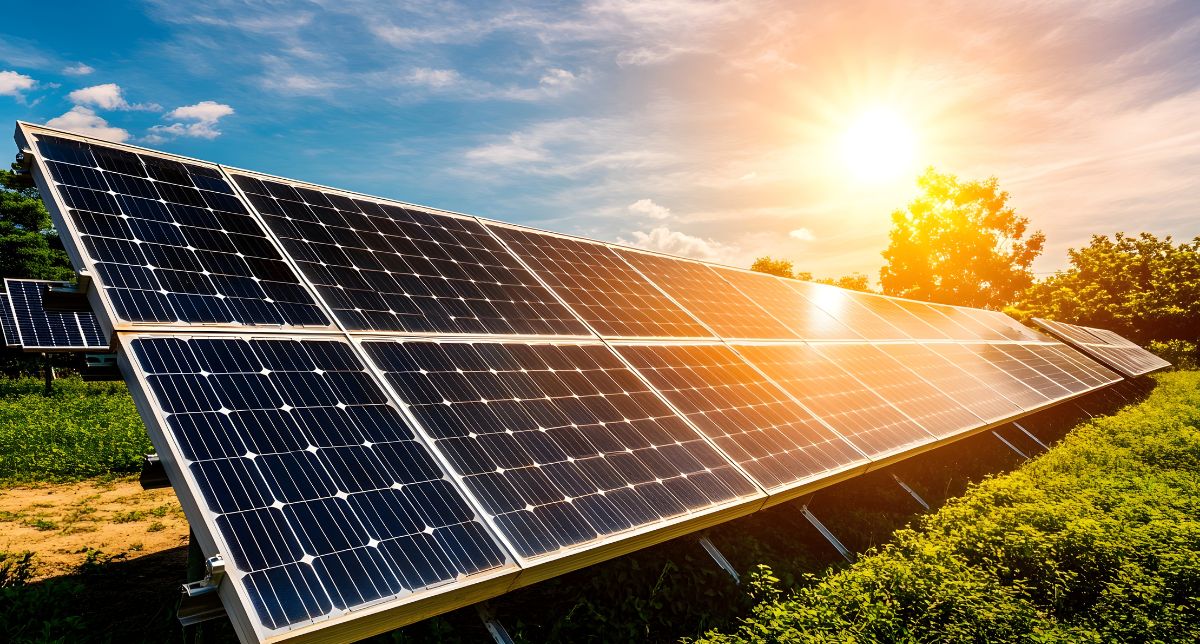
Solar photovoltaic energy reached the milestone of 62 gigawatts accumulated in November 2025, according to records from the Brazilian Photovoltaic Solar Energy Association. Since 2012, when data began to be systematically tracked, the sector has mobilized 279.7 billion reais in investments, generated 1.8 million jobs, and contributed 87.3 billion reais in tax revenue.
However, the pace of growth slowed significantly in 2025. Brazil added only 11.4 gigawatts of solar capacity during the year, a 24% drop compared to the 15 gigawatts installed in 2024. It was the second consecutive year of contraction after years of exponential growth. Investments in the sector totaled 39 billion reais, down 29% from 54.9 billion in 2024.
Wind power showed an even more dramatic picture. Only 2.2 gigawatts were installed during 2025, the lowest volume since 2019. The country reached 34.253 gigawatts of accumulated wind capacity, maintaining fifth place globally, but annual additions fell by half compared to 2024, when 3.27 gigawatts were added.
Despite these discouraging figures for new investment, the operational performance of the renewable mix was remarkable. Solar power set historic generation records. On March 14, it reached 37,992 megawatts of instantaneous peak output, meeting 39.2% of demand at that moment. Wind power’s share in the electricity system jumped from 10% in February 2024 to 22% in October 2025, driven by exceptional atmospheric conditions.
By December 1, Brazil totaled 215,576 megawatts of installed capacity regulated by ANEEL, with 84.45% from renewable sources. From January to November, 118 new plants entered operation, including 53 solar facilities and 37 wind farms.
Distributed generation, represented by solar panels on homes and small businesses, kept its momentum. Brazil recorded the adoption of solar power by 217,000 companies in 2025, adding 2 gigawatts between January and October. The historical total reached 3,838,765 distributed systems in operation.
Job creation, however, began to feel the impact of the slowdown. In 2025, the solar sector generated 396,000 direct and indirect jobs, with 13 billion reais in tax revenue. For 2026, projections point to a reduction to 319,900 jobs, a 19% decline.
The Invisible Bottleneck: Curtailment and Transmission
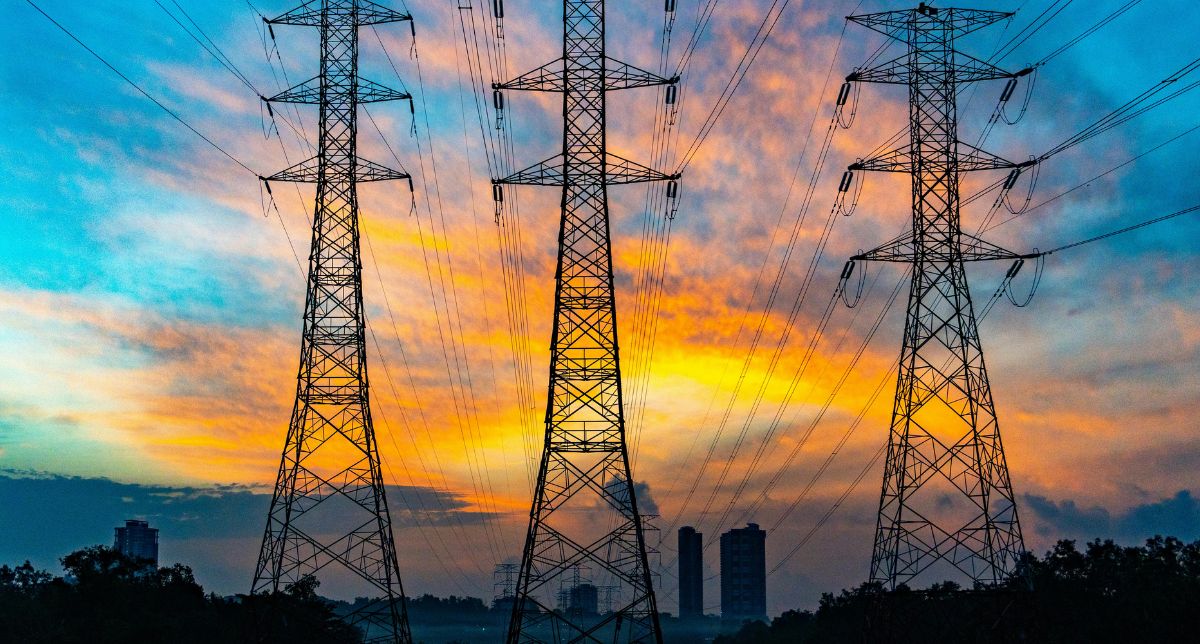
The fundamental reason for this slowdown lies in a phenomenon invisible to most consumers: curtailment, or forced generation cuts. When the amount of solar and wind power produced exceeds the transmission system’s ability to deliver it to consumption centers, the National System Operator (ONS) is forced to shut down plants to prevent grid instability.
Between January and August 2025, renewable generators suffered losses of 1.7 billion reais due solely to these mandatory cuts. In August, losses reached 881 million reais. According to a survey presented at ENASE 2025, the accumulated losses for wind and solar plants across the entire year reached 4.8 billion reais.
The economic impacts were severe. Solar parks with less than a year of operation faced cuts of up to 70% of their capacity, jeopardizing financing agreements. Multinational companies signaled they were revisiting their investment strategies in Brazil.
This is the operational paradox of 2025: Brazil produces record levels of clean energy, but cannot consume everything it generates. Transmission infrastructure did not keep pace with the rapid growth in renewable generation over previous years.
The Climate Conference in Belém: Ambition Without a Clear Roadmap
In November 2025, Brazil hosted COP30 in Belém, the United Nations Climate Change Conference. One hundred and ninety-five countries approved 29 consensus decisions formalized in the Belém Package, representing the largest round of climate negotiations since COP26 in Glasgow in 2021.
Approved advances included a commitment to triple adaptation finance by 2035 for vulnerable countries, the operationalization of the Loss and Damage Fund for direct resource transfers, and the creation of new just transition mechanisms for economies dependent on fossil fuels. Seventeen countries joined a challenge to integrate ocean-based solutions into their national climate plans, with the One Ocean Partnership committing to catalyze 20 billion dollars by 2030.
However, the conference faced sharp criticism for what it failed to approve. The final texts do not explicitly mention fossil fuels and do not establish a clear roadmap for phasing them out. The Brazilian government’s priority, a “Roadmap for Moving Away from a Fossil Fuel-Dependent Economy,” did not make it into the list of approved consensus items, reflecting geopolitical divisions between developed and developing countries.
André Corrêa do Lago, president of COP30, had to suspend the plenary session for about an hour after questions from countries such as Colombia, Panama, Uruguay, and Argentina about some items being approved.
Brazil’s Target: 67% Reduction by 2035
Brazil presented its third Nationally Determined Contribution (NDC) at COP29 in November 2024, setting an ambitious target to reduce greenhouse gas emissions by 59% to 67% by 2035 compared to 2005 levels.
This target represents a significant acceleration in the pace of reductions. The previous NDC, presented in 2020, set a 37% reduction for 2025 and 43% for 2030. The new target requires cutting between 150 and 350 million tonnes of CO2 equivalent between 2030 and 2035, a significantly faster pace than the 100 million tonnes projected for 2025-2030 under the previous target.
According to an assessment by Roberto Schaeffer, a researcher at COPPE/UFRJ’s Center for Energy and Environmental Economics, the pace of reductions is accelerating and, as a result, Brazil’s ambition increases. Yet the question remains: will renewable energy be enough to reach these targets without simultaneous transformation in other sectors?

Deforestation: Fragile Gains
In October 2025, Brazil recorded an 11.08% reduction in Amazon deforestation and an 11.49% reduction in the Cerrado compared to the previous year. Cumulatively since 2022, the country avoided the emission of 733.9 million tonnes of CO2 equivalent from deforestation, a volume equivalent to the combined emissions of Spain and France in 2022.
However, this progress appears fragile in the face of forest fires. The 2024 fires triggered an emissions crisis. The Amazon recorded 791 million tonnes of CO2 released by burning, seven times above the recent historical average and, for the first time, exceeding emissions from direct deforestation.
Forest degradation, the partial loss of vegetation caused by fire and selective extraction, surged alarmingly in 2024. While direct deforestation caused emissions of 60.7 million tonnes of CO2 equivalent, degradation was responsible for 161.4 million tonnes. This phenomenon signals a growing weakening of primary forest cover.
In 2025, signs of backsliding began to appear. Data from May showed a 92% increase in deforestation compared to May of the previous year. An analysis of the first six months of the year indicated a 27% rise in deforestation alerts compared to the same period in 2024.
João Paulo Capobianco, executive secretary of the Ministry of the Environment, warned in June that with worsening climate change and greater fragility of primary forest cover, Brazil was beginning to witness a shift in conditions that confirmed the warnings long issued by the scientific community.
The Global Climate Challenge: Accelerating Warming
The year 2025 consolidated itself as the second-hottest year on record since systematic global temperature measurements began, surpassed only by 2024. From January to August, the global average temperature reached 1.42 degrees Celsius above pre-industrial levels.
In May, the World Meteorological Organization released troubling outlooks. There is an 86% probability that at least one year between 2025 and 2029 will exceed 1.5 degrees Celsius above pre-industrial levels, the threshold set by the Paris Agreement as the reference point for avoiding the worst climate change scenarios. This percentage represents a significant increase from the 47% estimated in an earlier report.
There is a projected 70% chance that the average temperature for the entire 2025-2029 period will be above 1.5 degrees Celsius. For the Arctic specifically, the next five winters are expected to see warming of 2.4 degrees Celsius above the 1991-2020 historical average, signaling extreme vulnerability in polar regions.
The Atmosphere: CO2 at Alarming Levels
Carbon dioxide concentration reached 425.4 parts per million in December 2024 and continued to climb. An increase of 3.5 parts per million in just 12 months represents an alarming pace of atmospheric change. Projections indicate that the concentration will exceed 430 parts per million in May 2025.
To put the magnitude of this concentration in context, paleoclimate studies indicate that CO2 had not reached this level for at least 800,000 years. The last ten years, spanning 2015 to 2024, were the hottest ever recorded in the Holocene. The years 2023 and 2024 individually were the hottest in the last 125,000 years.
This continued rise in CO2 is happening at the same time as the global expansion of renewable energy, indicating that the growth of clean sources has been insufficient to offset the planet’s total emissions. Global agriculture, transport, heavy industry, and forest loss continue to emit at a pace that outstrips decarbonization in the energy sector.
Brazilian Agriculture: A Fourth Consecutive Record
Brazilian agriculture recorded its fourth consecutive emissions record in 2024-2025, totaling 631.2 million tonnes of CO2 equivalent. This sector is Brazil’s largest single source of emissions, driven mainly by livestock and the production of food for export.
This figure poses a major challenge to Brazil’s goal of cutting emissions by 67% by 2035. Renewable energy, despite its successes, will not be able to meet these targets on its own without simultaneous transformation of the agricultural sector, one of the pillars of Brazil’s economy.
The 2025 Paradox: When Success Isn’t Enough
The year 2025 reveals an uncomfortable truth about the global climate transition. Brazil consolidated the most renewable electricity mix in the world, with 84.45% of its installed capacity coming from clean sources. The country leads the energy transition and hosts a global climate conference with historic ambitions.
At the same time, CO2 concentration keeps rising to levels unprecedented in 800,000 years. Global temperature is edging dangerously close to 1.5 degrees of warming. Forest fires linked to climate change itself drive record emissions. Agriculture, a fundamental sector of the Brazilian economy, produces its highest emissions.
The paradox is that energy success does not equal climate success without simultaneous transformation across all sectors that account for most global emissions. Renewable energy is necessary, but not sufficient.
What’s Coming in 2026: Two Opportunities
Two developments could reshape the equation in 2026. The first is the battery storage auction scheduled for April, the first of its kind in Brazil. Storage would address the curtailment problem, allowing solar energy generated on sunny afternoons to be stored and released during periods of low irradiance.
The second development is the rise of data centers as a new pillar of demand. Requests to connect data centers to the power grid totaled 26.2 gigawatts in November 2025, a 32.3% increase in just two months. This enormous demand could absorb renewable energy that would otherwise be wasted due to curtailment.
However, these technological and economic advances do not solve the underlying climate challenge. The WMO projected that there is only a 14% probability that none of the next five years will exceed 1.5 degrees of warming. Crossing this limit, even temporarily, is practically inevitable.
The implications are severe. Every additional fraction of a degree of warming drives more intense heatwaves, extreme rainfall events, severe droughts, melting ice sheets, accelerated ocean warming, and sea level rise, with consequences for coastal zones where most of the world’s population lives.
Conclusion: Urgency Against the Clock
The year 2025 cements a fundamental truth: renewable energy is necessary but not sufficient to solve the climate crisis. Brazil leads the energy transition, COP30 set ambitious goals on finance and adaptation, yet CO2 concentrations keep rising at a fast pace, temperatures are breaking records, and global emissions are not falling at the speed required.
The story of 2025 will be told through those two numbers that don’t match: 215.6 gigawatts of clean capacity versus 425.4 parts per million of CO2. The first number represents what Brazil managed to do. The second number represents what the planet still faces.
The race against time is accelerating, but structural climate action is still far from the pace required. Clean energy has been achieved. The climate, unfortunately, remains in crisis.

Comment